We are ready to help you
RX 9070 XT vs RTX 5070: gaming graphics card comparison
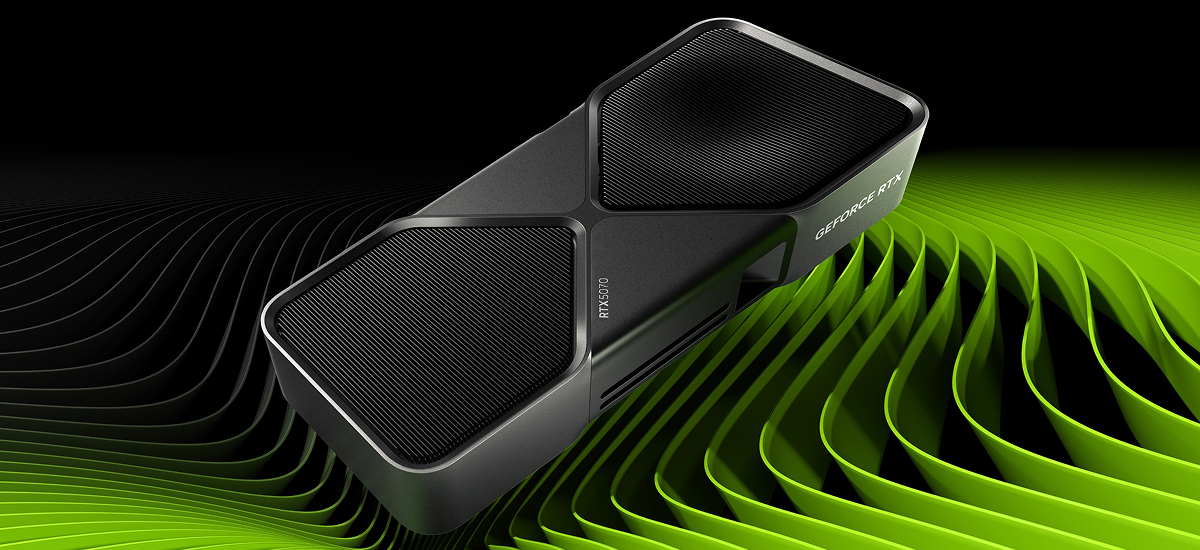
A battle between two mid-range flagships of 2026: AMD Radeon RX 9070 XT versus NVIDIA GeForce RTX 5070. Both graphics cards target gamers who want smooth gameplay in 1440p and 4K, but they offer fundamentally different architectures and priorities. This review will help you understand which card is right for you.
Architecture and product lineup
AMD RDNA 4: focus on rasterization and memory capacity
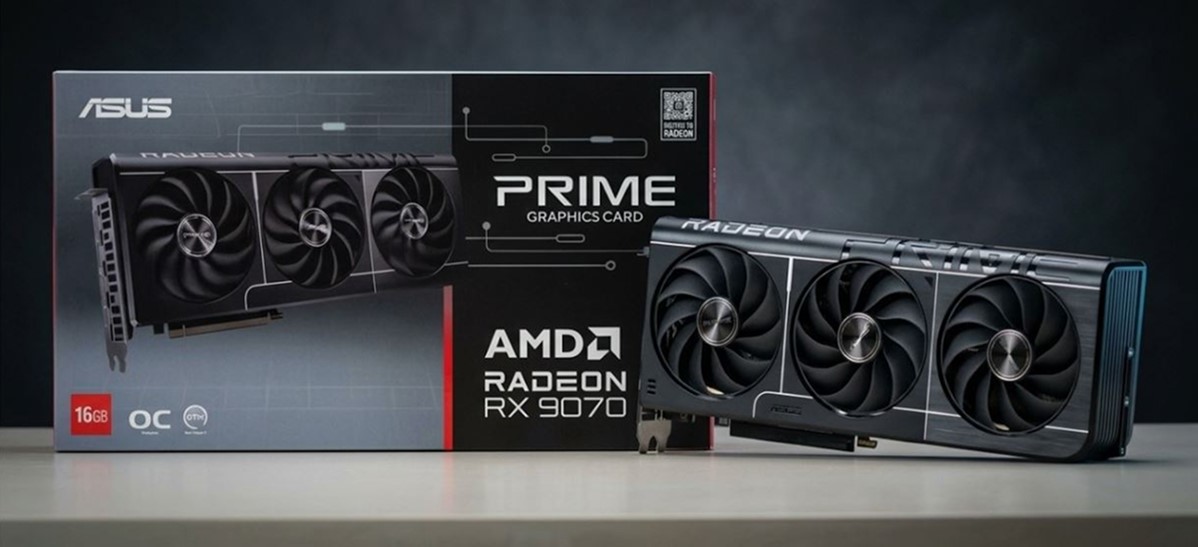
AMD built Radeon RX 9070 XT on the RDNA 4 next-generation architecture with a monolithic Navi 48 chip (TSMC N4P). Key advantages include 16 GB of GDDR6 memory on a 256-bit bus with 644.6 GB/s bandwidth and high raster performance. The large monolithic die made it possible to include a sizeable 64 MB L3 cache — this is what gives the card a confident lead in native rasterization.
The graphics card is available in a wide range of models: the premium Sapphire Nitro+ with a triple-fan cooler, the reliable ASUS TUF Gaming OC, Gigabyte Gaming OC, ASRock Challenger OC, and MSI Gaming. The Radeon RX 9070 XT Gaming OC and Radeon RX 9070 XT OC versions received factory overclocking and reinforced thermal systems. For those who want to save money, compact dual-fan solutions such as XFX Swift Dual Fan Edition are suitable without paying extra for a top-tier cooler. Fans of snow-white design can choose the massive triple-fan Sapphire Pure. Among the most popular options are RX 9070 XT Sapphire Nitro+ and RX 9070 XT Gaming from Gigabyte.
NVIDIA Blackwell: focus on AI and ray tracing
NVIDIA GeForce RTX 5070 uses the Blackwell architecture with the GB205 chip. The RTX 5070 graphics card offers 12 GB of GDDR7 with 672 GB/s bandwidth, fourth-generation RT cores, and DLSS 4 with Multi Frame Generation.
A significant part of the silicon is dedicated to fifth-generation Tensor Cores with FP4 support — this delivers a major boost in AI workloads and gaming upscaling. Online stores offer GeForce RTX 5070 models from Gigabyte Eagle OC, Palit Dual, MSI Ventus 3X, and ASUS Dual. The card has a 250 W TDP — 54 W lower than AMD’s rival (304 W).
Gaming tests
Rasterization: AMD wins at native resolution
RX 9070 XT tests at 1440p without ray tracing show a clear AMD advantage — FPS is 18% higher on average versus GeForce. Testing was performed on a bench with a Ryzen 7 9800X3D processor, maximum graphics settings, and upscaling disabled.
In 4K the gap grows to 25% in AMD’s favor — 16 GB of VRAM provides headroom where NVIDIA’s 12 GB RTX 5070 starts to become insufficient for loading heavy textures. In the most demanding games, the NVIDIA card encounters microstutter because data is offloaded to system RAM over the PCIe bus.
| Game (1440p, Ultra) | Radeon RX 9070 XT | GeForce RTX 5070 |
|---|---|---|
| God of War: Ragnarök | 163 FPS | 130 FPS |
| Cyberpunk 2077 | 125 FPS | 98 FPS |
| A Plague Tale: Requiem | 113 FPS | 95 FPS |
| Dragon's Dogma 2 | 116 FPS | 106 FPS |
| Starfield | 90 FPS | 68 FPS |
Ray tracing: NVIDIA strikes back
In games with ray tracing, the situation changes. NVIDIA GeForce RTX 5070 outpaces its rival by 30–53% in games with Path Tracing — Alan Wake 2 and Black Myth: Wukong. Blackwell’s fourth-generation RT cores process complex lighting more efficiently than AMD’s solution. In standard RT without an aggressive load, Radeon narrows the gap, but GeForce keeps the advantage.
| Radeon RX 9070 XT | GeForce RTX 5070 |
|---|---|
| 30 FPS | 46 FPS |
| 68 FPS | 78 FPS |
| 81 FPS | 89 FPS |
| 30 FPS | 39 FPS |
Work tasks: where each card is stronger
Outside games, the balance of power is different. In Blender Open Data, NVIDIA RTX 5070 is almost twice as fast thanks to CUDA and OptiX: 6,147 points versus 3,174 for AMD. GeForce is also preferable for streaming — the ninth-generation NVENC encoder with AV1 takes the load off the CPU. In H.264/H.265 editing, the situation is reversed: Radeon RX 9070 XT is 26% ahead of its rival thanks to efficient work with LongGOP codecs. For local language models and neural-network experiments, the AMD card is more beneficial — 16 GB of VRAM allows larger models to be loaded without offloading to RAM.
Price and final choice
The rx 9070 xt vs rtx 5070 price comparison: AMD Radeon RX 9070 XT starts at an average of 3,030 AED, while GeForce RTX 5070 starts from 2,700 AED. Despite the higher price, Radeon delivers a better cost per frame at 1440p (about 29 AED per FPS versus 30 AED per FPS for GeForce) and at 4K (roughly 43 AED versus 45 AED). Both graphics cards are available from major online stores across Russia, including Moscow.
From the perspective of long-term consumer financial safety, it is important to consider the total cost of owning the system. The RX 9070 XT graphics card consumes up to 304 W under load, which requires buying a quality power supply rated at least 750–850 W, with mandatory certification no lower than 80 PLUS Gold and overload protection (OCP/OVP) to avoid fire-hazard situations. The energy-efficient RTX 5070 (up to 250 W power consumption) is less demanding in terms of power — a 600–650 W unit will be enough for it.
Ready-made solutions from HYPERPC
The HYPERPC website offers top gaming PCs with current new-generation graphics processors: RTX 5070 — for demanding 4K gaming with ray tracing, RTX 5060 Ti with 16 GB — for stable gameplay at 1440p, RTX 5060 — the optimal choice for 1080p gaming with plenty of headroom.

 Arabic
  English