We are ready to help
Core Ultra 9 285K vs Ryzen 9 9950X3D: What to Choose in 2026
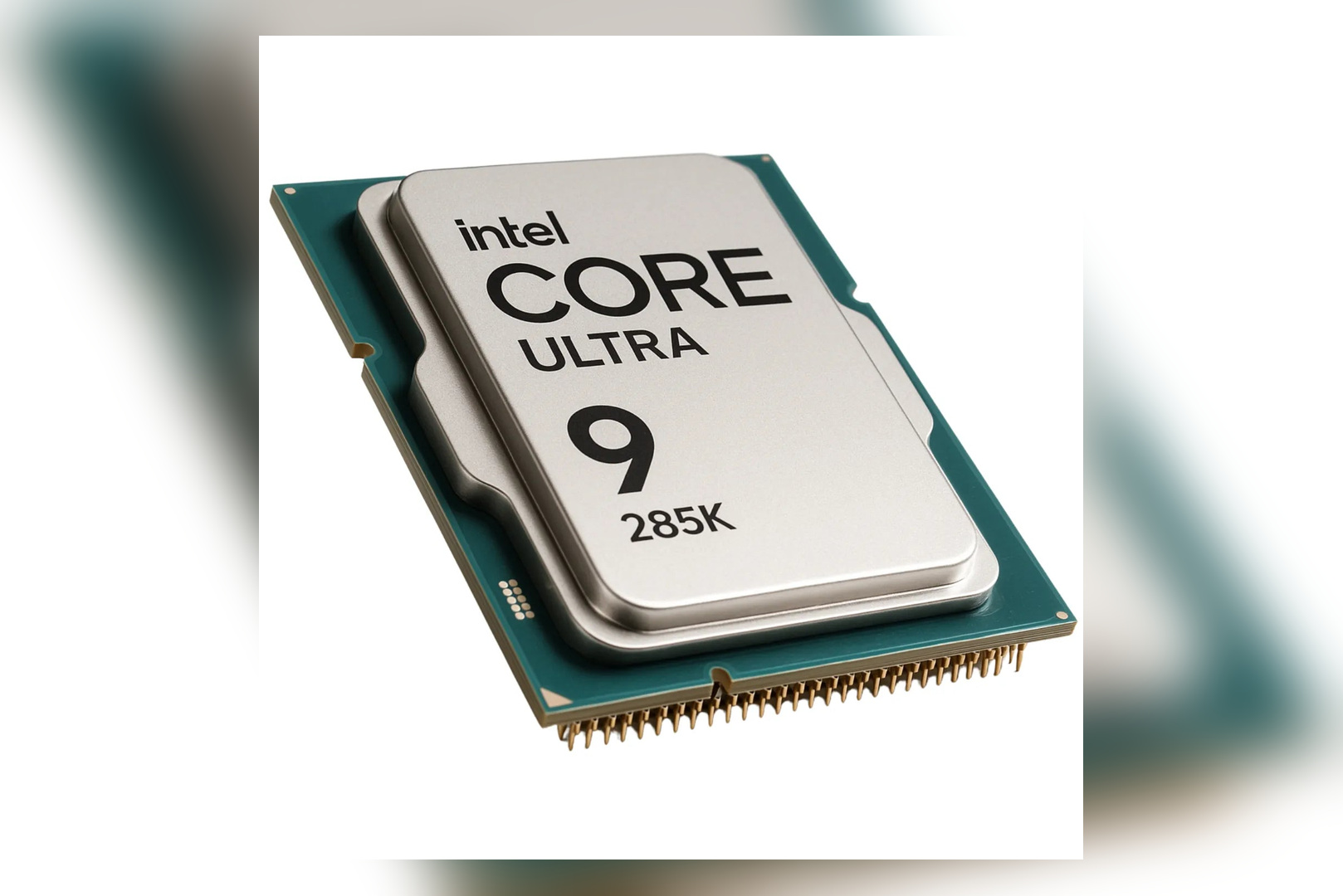
The Core Ultra 9 285K and the Ryzen 9 9950X3D are the Intel and AMD flagships for desktop platforms, and at first glance they look like the same class of processor. In practice they are strong at different things: the 9950X3D is clearly faster in games thanks to its 3D cache, while in work tasks the two stay close, with each one winning depending on the application.
Below are the specifications, results in games and work tasks, power draw, platform outlook, and which processor suits whom.
Specifications
| Spec | Core Ultra 9 285K | Ryzen 9 9950X3D |
|---|---|---|
| Cores and threads | 24 cores (8 performance and 16 efficiency), 24 threads | 16 cores, 32 threads |
| Maximum clock | up to 5.7 GHz | up to 5.7 GHz |
| L3 cache | 36 MB | 128 MB, including 3D V-Cache |
| Base power | 125 W, up to 250 W in turbo | 170 W |
| Platform | LGA 1851 | AM5 |
| Memory | DDR5, CUDIMM support | DDR5 |
| Integrated graphics | Intel Graphics | basic AMD Radeon |
| NPU | Yes | No |
Two lines define how these processors behave. The huge cache on the 9950X3D is its main weapon in games. Integrated graphics with Quick Sync media blocks on the 285K is an advantage in video editing with certain codecs.
Gaming: the 9950X3D is clearly ahead
The gap is largest in games. In comparative tests at 1080p with a flagship graphics card, the Ryzen 9 9950X3D is on average about 30-35 percent faster than the Core Ultra 9 285K. Games where the 285K pulls ahead are rare, and the margin there is a few frames.
How to read that:
- The gap is largest where the processor is the limit: 1080p, competitive games at a high frame rate, simulators, MMOs and Tarkov. Those are exactly the games where 3D cache gives the biggest gain in minimum FPS.
- The gap shrinks as resolution rises. At 4K the graphics card carries most of the load, and both processors wait on it.
- For 240-360 Hz monitors the 9950X3D advantage is noticeable in practice.
Separately, a pure gaming system is better served by the eight-core Ryzen 7 9800X3D than by the 9950X3D: in games it is comparable and it costs clearly less. The 9950X3D makes sense when gaming is combined with serious work.
Work tasks: nearly even
In professional applications the picture changes: the processors are close, and the winner depends on the program.
| Task | Ahead | Note |
|---|---|---|
| CPU render in Blender | 9950X3D | Render time about 14 percent shorter |
| POV-Ray render | 285K | A lead of about 31 percent |
| Premiere Pro | 285K, by a small margin | Quick Sync and integrated graphics help |
| Single-thread performance | 285K | About 9 percent in synthetic tests |
| Multi-thread performance | 9950X3D | About 3 percent in synthetic tests |
The practical conclusion: for work tasks the choice between these processors is about the specific software, not an overall win. If the main application uses Quick Sync or scales well across Intel's larger core count, the 285K keeps up and sometimes wins. For CPU rendering in Blender and similar packages, the 9950X3D has a small advantage.
An important caveat: in modern 3D packages rendering increasingly runs on the graphics card, and the processor's role shifts toward viewport responsiveness and simulations. More detail is in the articles on a PC for Cinema 4D and on RTX 5000 in Premiere Pro and DaVinci Resolve.
Power draw and cooling
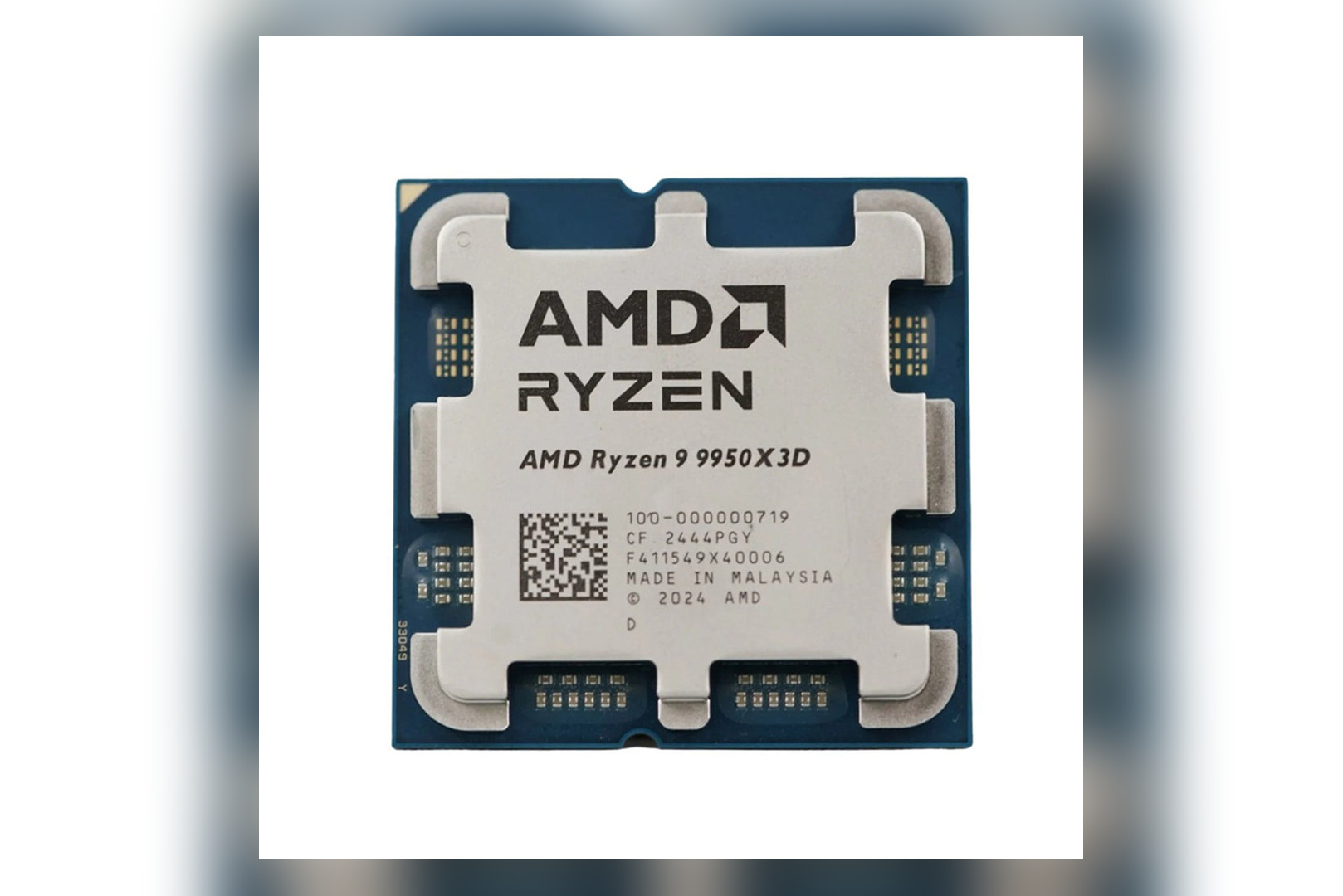
Under full load both processors are hot flagships, and cooling is not the place to save money.
- The Core Ultra 9 285K has a 125 W base power and up to 250 W in turbo. Under a long multi-thread load it reaches the upper limit.
- The Ryzen 9 9950X3D has a stated power of 170 W. In games the cache often makes it more efficient, delivering more frames per watt.
For both, a good liquid cooler with a 360 mm radiator or a strong tower cooler is sensible, along with a case that breathes well. In a warm climate that headroom matters even more.
Platform and upgrade outlook
A processor is bought together with a platform, and the differences here are substantial.
- AM5. AMD has said it will support the platform at least through 2027. Buying an AM5 motherboard leaves a path to replace the processor with future generations.
- LGA 1851. From what is known, Intel's next major desktop generation will move to a new socket. That means an upgrade within LGA 1851 is limited to the current generation and its refreshes.
For anyone who plans to change the processor in a few years without replacing the board, that is an argument for AM5. How to judge whether an upgrade pays off is covered in upgrade or a new computer.
Price and what you get
The Core Ultra 9 285K costs clearly less than the Ryzen 9 9950X3D. In work tasks the gap between them is small, while in games the 9950X3D is substantially faster. The choice follows from that:
- Pay for the 9950X3D if games matter to you as much as work.
- Save with the 285K if the computer is mainly for work and games are at 1440p and 4K, where the graphics card is the limit.
Which processor for whom
Ryzen 9 9950X3D if:
- the computer is for gaming and serious work at the same time;
- you play CPU-bound games on high-refresh monitors;
- you stream while playing;
- you plan to upgrade the processor without replacing the board;
- your main work tool is CPU rendering in Blender and similar packages.
Core Ultra 9 285K if:
- the computer is mainly for work: editing in Premiere Pro and applications that use Quick Sync;
- single-thread performance matters;
- games are at 1440p and 4K, where the gap between the processors is small;
- you want to spend less on the processor and put the difference into the graphics card or memory.
Ryzen 7 9800X3D if the computer is purely for gaming: in games it is comparable to the 9950X3D and costs clearly less. A closer look for a specific game is in the article on PC configurations for Dota 2.
Ready systems with both processors are in the gaming PC catalog and among the workstations, and you can build your own in the configurator.
Recommended
Frequently Asked Questions
- Which is better for games: the Core Ultra 9 285K or the Ryzen 9 9950X3D?
The Ryzen 9 9950X3D. In comparative tests at 1080p with a flagship graphics card it is on average about 30-35 percent faster thanks to 3D cache. The gap shrinks as resolution rises, because the limit moves to the graphics card.
- Which is better for work?
The processors are close, and the winner depends on the program. The 9950X3D is about 14 percent faster in a CPU Blender render, the 285K is about 31 percent faster in POV-Ray and slightly ahead in Premiere Pro thanks to Quick Sync.
- How many cores do the Core Ultra 9 285K and Ryzen 9 9950X3D have?
The Core Ultra 9 285K has 24 cores: 8 performance and 16 efficiency, and 24 threads. The Ryzen 9 9950X3D has 16 cores and 32 threads. Both reach up to 5.7 GHz.
- What is 3D V-Cache and why does it matter in games?
It is extra cache stacked on the processor die. The 9950X3D has 128 MB of L3 cache against 36 MB on the 285K. A large cache reduces trips to system memory, which especially speeds up CPU-bound games.
- Which processor uses more power?
The Core Ultra 9 285K has a 125 W base and up to 250 W in turbo; the Ryzen 9 9950X3D is rated at 170 W. Both need serious cooling under full load, for example a liquid cooler with a 360 mm radiator.
- Which platform has the better outlook: AM5 or LGA 1851?
AM5: AMD has said it will support the platform at least through 2027. From what is known, Intel's next major desktop generation will move to a new socket, so an upgrade within LGA 1851 is limited.
- Is the 9950X3D worth buying for games only?
Not necessarily. For a pure gaming system the Ryzen 7 9800X3D is comparable in games and costs clearly less. The 9950X3D is justified when gaming is combined with multi-thread work.
- Which processor is better for streaming?
The Ryzen 9 9950X3D: high gaming performance and 32 threads let you play and stream at the same time. Video encoding itself is usually done by the graphics card.
- Which processor is better for editing in Premiere Pro?
The Core Ultra 9 285K has a small advantage thanks to Quick Sync and integrated graphics. With a current NVIDIA RTX 50 card and hardware 4:2:2 decoding, the gap between the processors in editing shrinks.
- Which processor is better value?
The Core Ultra 9 285K costs clearly less. If the computer is for work and games are at high resolution, that is a sensible saving. If games matter, especially at a high frame rate, the extra cost of the 9950X3D is justified.

 Arabic
 English