We are ready to help
AMD Helios: Rack-Scale Production and Network Bandwidth
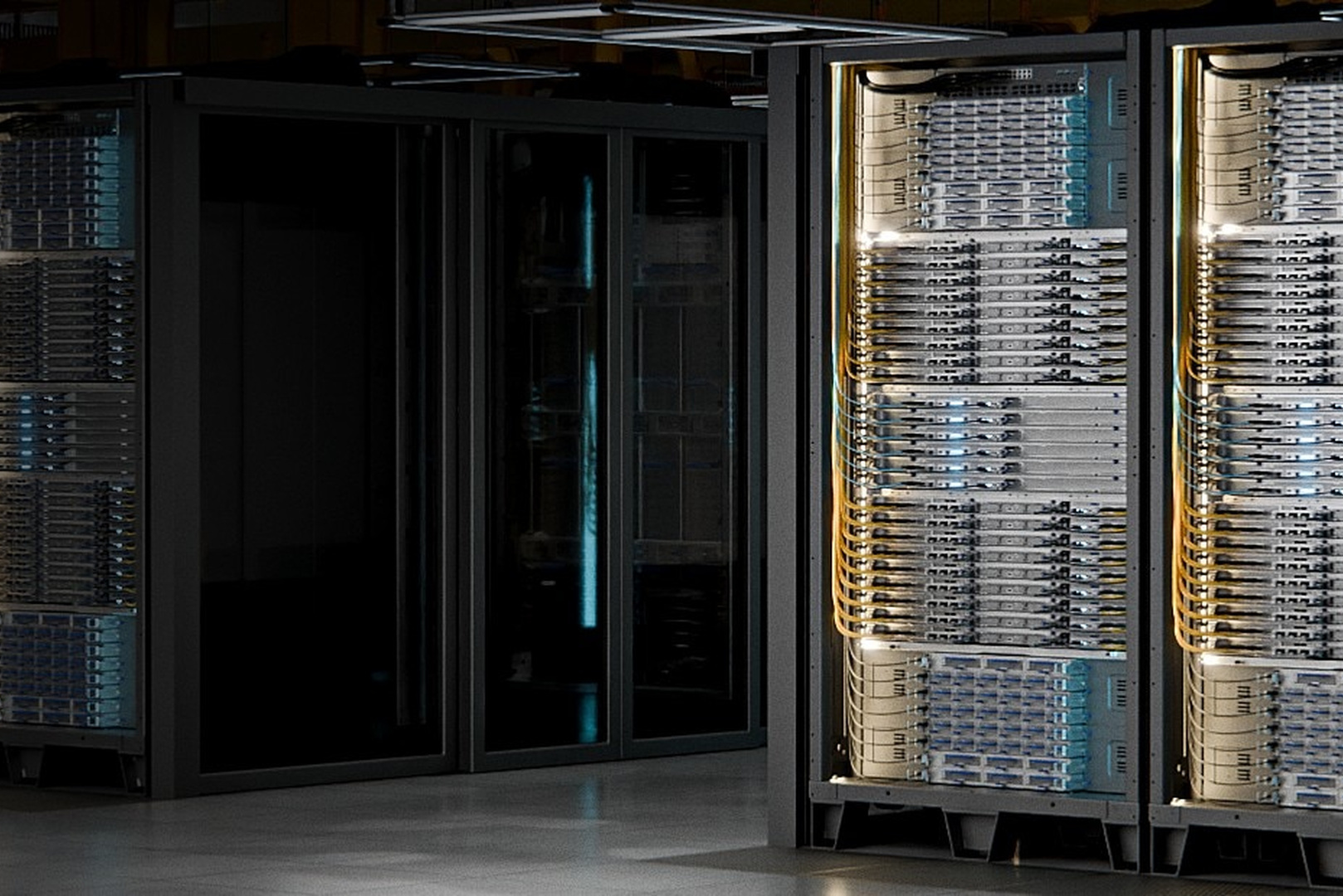
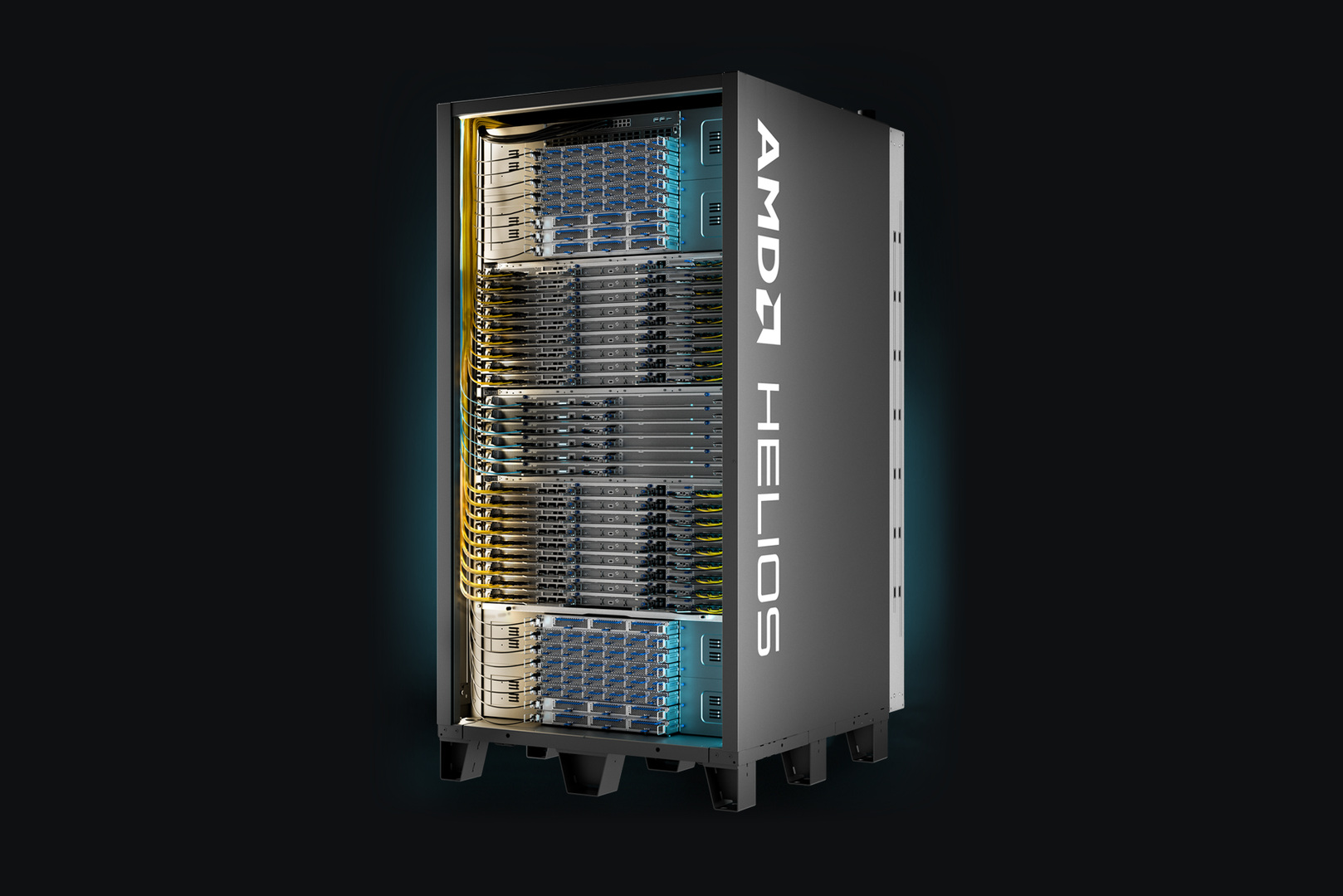
Helios is AMD’s first fully integrated rack-scale AI system. Its defining feature is not the number of accelerators, but the fact that every network inside the rack uses Ethernet and open standards instead of a proprietary interconnect. In a market where rack-scale AI systems have meant closed links from a single vendor, this is a fundamental shift.
Below, we examine what AMD actually announced, how to read the bandwidth figures, why scale-up and scale-out are different numbers, and which parts of this architecture apply to infrastructure far smaller than a rack with 72 accelerators.
What Helios Is and How It Differs from a Conventional Server
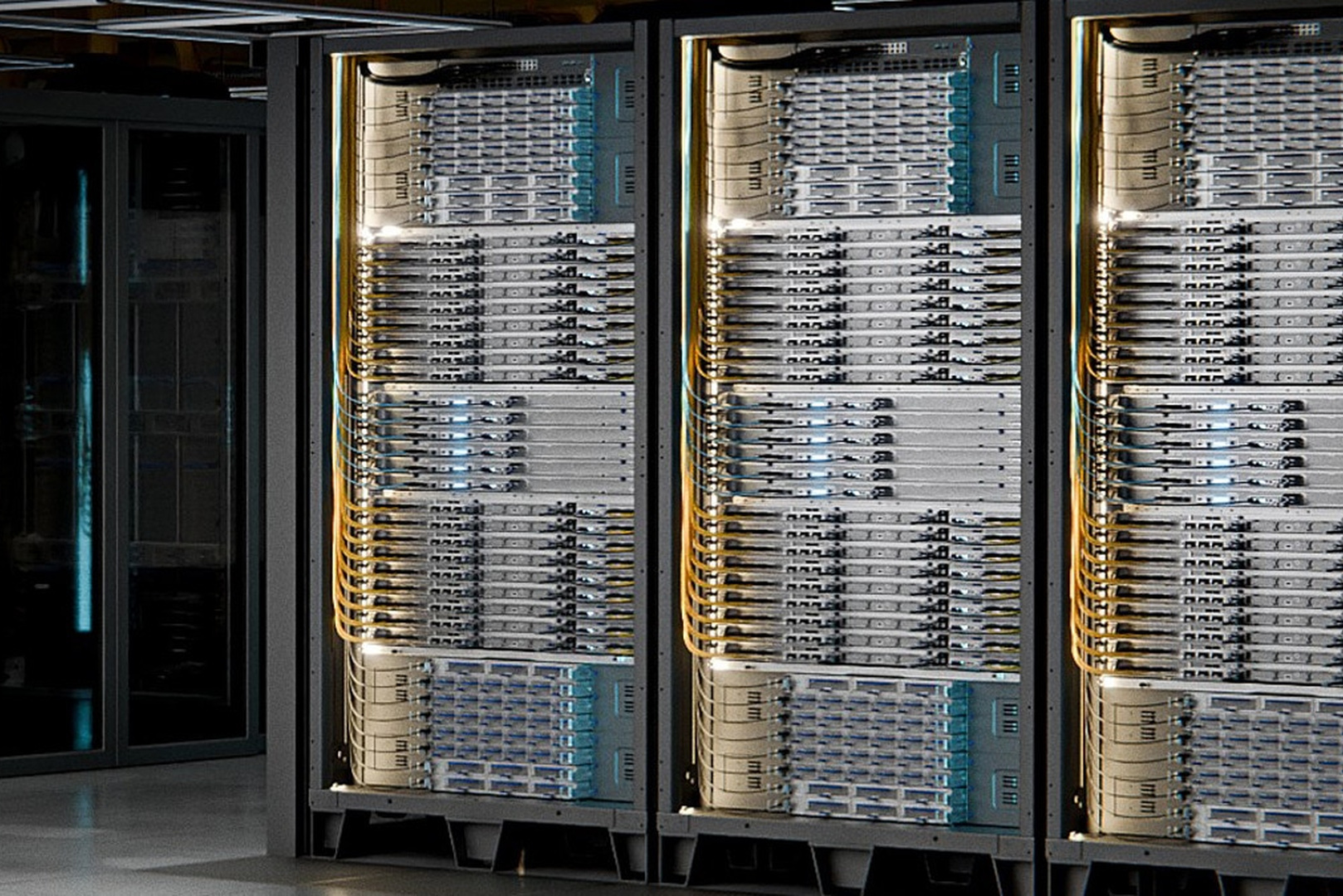
Helios is not a server but a rack designed as one computing device. Its 72 Instinct MI455X accelerators form a single scale-up domain: from the workload’s perspective, it is one large machine with a shared memory pool, not 72 separate servers connected by a network.
This distinction determines which problems can be solved in the first place:
- Separate servers connected by a network suit workloads that can be divided into independent parts: serving many inference requests, batch processing, and rendering.
- A rack-scale domain with shared memory is required when a model does not fit into one node’s memory and must be distributed. Accelerator-to-accelerator exchange speed then becomes as important a resource as compute itself.
- Hybrid arrangements—training on the rack and inference on separate nodes—are the most common pattern in real deployments.
Alongside the accelerators, the platform uses sixth-generation EPYC processors. The MI400 family includes three models—MI430X, MI440X, and MI455X—all presented at CES 2026.
Key Specifications
| Parameter | Value |
|---|---|
| Accelerators per rack | 72 Instinct MI455X |
| Unified memory | 31 TB HBM4 |
| Peak FP4 performance | 2.9 exaflops |
| Scale-up bandwidth | 260 TB/s |
| Scale-out per adapter | 800 Gbit/s (Pensando Vulcano) |
| Adapter interface | PCIe Gen 6, OCP form factor |
| Rack standard | OCP Open Rack Wide (ORW) |
| Accelerator interconnect | UALink |
| Scale-out fabric | Ultra Ethernet (UEC) |
| Processors | Sixth-generation EPYC |
The 260 TB/s figure must be read correctly: it is the aggregate bandwidth of the internal domain, not the speed of a single link. It describes how quickly 72 accelerators exchange data with one another, and this is precisely the factor that limits the scaling of large models.
Why Ethernet Instead of a Proprietary Interconnect
AMD’s key decision is that every fabric in the rack, from the front-end network to accelerator-to-accelerator links, runs on Ethernet and open standards. There are three practical reasons.
- Compatibility with existing infrastructure. Ethernet is already deployed in every data center, with mature monitoring and diagnostic tools and teams that know how to operate it.
- No vendor lock-in. A proprietary interconnect means buying switches, cables, and adapters from one vendor at its prices and on its schedule.
- Pace of development. Dozens of companies advance Ethernet simultaneously, and moving from 400 to 800 Gbit/s within this ecosystem does not require a new architecture.
There is a trade-off. Proprietary interconnects have historically delivered lower latency for collective operations, which is why they dominated AI clusters. The UALink and Ultra Ethernet consortia were created to close this gap with standards-based technology, and Helios is the first large-scale test of how successful they have been.
Scale-Up and Scale-Out: Why They Are Different Numbers
Confusing these concepts is the main reason AI platform specifications are misread. The distinction is simple.
Scale-up is connectivity within one domain, between the accelerators in a single rack. Maximum bandwidth and minimum latency matter because weights and activations travel over this channel during distributed computing. In Helios, UALink handles this traffic with an aggregate bandwidth of 260 TB/s.
Scale-out is connectivity between racks—the data-center network itself. Standards, routability, and manageability come first. Ultra Ethernet and Pensando adapters provide it: 400 Gbit/s with Pollara and 800 Gbit/s with the upcoming Vulcano.
The practical design conclusion is that adding accelerators to a cluster without a corresponding increase in scale-out bandwidth produces diminishing returns. At some point, data exchange rather than computation becomes the bottleneck, and the added accelerators sit idle while waiting for synchronization.
What UALink, Ultra Ethernet, and OCP ORW Mean
Three abbreviations define how open the platform is.
- UALink (Ultra Accelerator Link) is an open standard for connecting accelerators within a domain and a direct response to proprietary scale-up solutions.
- UEC (Ultra Ethernet Consortium) extends Ethernet for AI and HPC workloads with congestion control, multipath transport, and lower latency for collective operations.
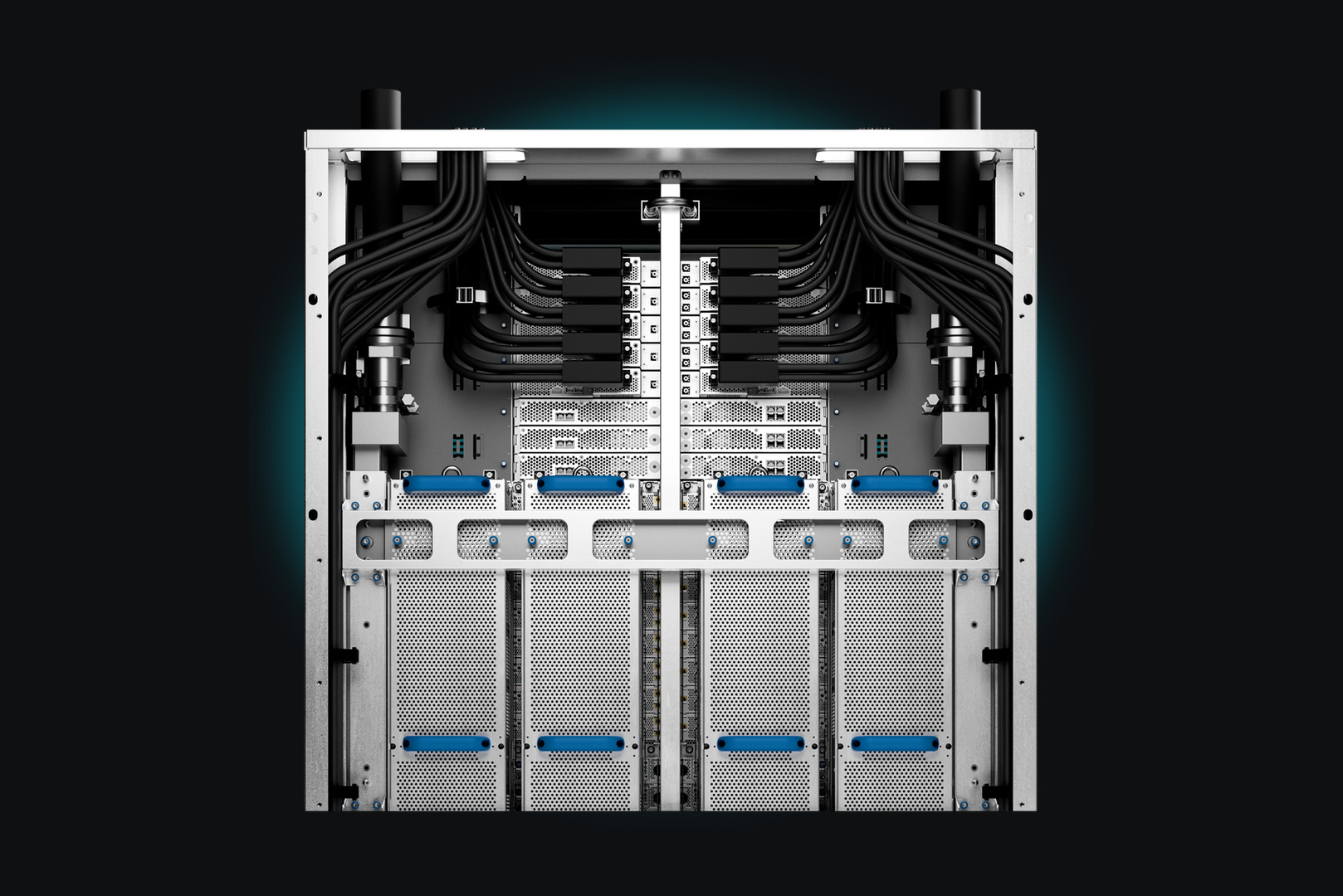
- OCP Open Rack Wide (ORW) is an open specification for the rack itself—dimensions, power, and cooling. It means the rack and its components can be sourced from different manufacturers.
This is why Helios reaches the market through OEM and ODM partners rather than as a single AMD product. Supermicro is building a rack with 72 MI455X accelerators, and AMD announced a partnership with Celestica in March 2026. Deployment is taking place throughout 2026.
Pollara 400G and Vulcano 800G Adapters
The networking side of the platform is built on Pensando adapters, and their specifications matter more than they may first appear.
- Pensando Pollara 400G is the current generation, providing 400 Gbit/s and working with existing Ultra Ethernet infrastructure.
- Pensando Vulcano 800G is the upcoming generation: 800 Gbit/s for scale-out, a PCIe Gen 6 interface, OCP form factor, and UALink support for direct connectivity to processors and accelerators.
PCIe Gen 6 deserves particular attention. An 800 Gbit/s adapter cannot deliver its full bandwidth over a slower bus: one PCIe Gen 5 x16 slot is no longer sufficient. This is a case where the network card dictates the requirements for the entire platform, rather than the other way around.
What Applies at a Smaller Scale
A rack with 72 accelerators is relevant to only a small number of companies. However, the principles behind it also apply to infrastructure with one or two servers, and ignoring them is expensive.
- Design the network together with compute, not afterward. The classic mistake is to buy accelerated servers and leave networking until later. The nodes exist, but training cannot be distributed across them.
- Interconnect bandwidth matters more than the number of cards when a model does not fit into one accelerator’s memory. Two cards with a fast link often outperform four with a slow one.
- Memory capacity determines what can run at all. The 31 TB in Helios solves the same problem as 48 or 96 GB on one professional card at a different scale: the model either fits or it does not. See how much VRAM Llama 70B and DeepSeek need for local deployment.
- The PCIe bus becomes the constraint. Fast adapters and accelerators require a current PCIe generation and enough lanes, which must be checked when selecting the platform.
- Open standards reduce total cost of ownership. The ability to source components from several vendors affects price and delivery time more than small specification differences between nodes.
Training and inference configurations are available in the GPU servers and machine-learning servers sections, while professional single-node systems are available under workstations.
When the Network Becomes the Bottleneck
Signs that data exchange, rather than computation, is the limiting factor:
- Accelerator utilization remains clearly below 90% during active training, while profiling shows time spent waiting for synchronization.
- Scaling is nonlinear: doubling the number of nodes produces clearly less than a 1.5× speedup.
- Iteration time grows faster than compute as model size increases.
- Collective operations consume a noticeable share of every step.
In these cases, adding accelerators does not help. Bandwidth must be increased and latency reduced, which means working on the network layer. This is exactly the problem an architecture such as Helios addresses, only at its own scale.
What to Do Now
If you are designing or expanding AI infrastructure, the Helios announcement has three practical implications:
- Prefer open standards wherever there is a choice, reducing the risk of dependence on one vendor throughout the infrastructure lifecycle.
- Give networking its own budget line, with importance comparable to the accelerators.
- Check the PCIe generation and lane count before buying adapters: an 800 Gbit/s card on an older bus will not deliver its stated bandwidth.
Configurations for specific models and data volumes can be built around HYPERPC servers and workstations.
Recommended
Frequently Asked Questions
-
What is AMD Helios?
AMD’s first rack-scale AI system, in which 72 Instinct MI455X accelerators form a single compute domain with 31 TB of HBM4 memory and peak FP4 performance of 2.9 exaflops. Its defining feature is that every network inside the rack is built on Ethernet and open standards.
-
What is the network bandwidth of Helios?
The scale-up domain provides 260 TB/s of aggregate bandwidth between accelerators over UALink. Rack-to-rack connectivity uses Ultra Ethernet with Pensando adapters: 400 Gbit/s for Pollara and 800 Gbit/s for the upcoming Vulcano.
-
What is the difference between scale-up and scale-out?
Scale-up connects accelerators within one domain, where maximum bandwidth and minimum latency are critical. Scale-out connects racks across the data-center network, where standards and manageability come first. They are separate fabrics with separate requirements, and their figures should not be compared directly.
-
Why did AMD choose Ethernet instead of a proprietary interconnect?
Ethernet is already deployed in data centers together with the tools and expertise needed to operate it. An open standard removes dependence on one switch and cable vendor, while dozens of companies advance the standard together. UALink and Ultra Ethernet address latency for collective operations.
-
What are UALink and Ultra Ethernet?
UALink is an open standard for connecting accelerators inside a domain and an alternative to proprietary scale-up solutions. Ultra Ethernet extends Ethernet for AI and HPC with congestion control, multipath transport, and lower latency for collective operations.
-
When will Helios be available?
Deployment is taking place throughout 2026 through OEM and ODM partners. Supermicro is building a rack with 72 MI455X accelerators, and AMD announced a partnership with Celestica in March 2026.
-
Which accelerators make up the MI400 family?
Three models presented at CES 2026: MI430X, MI440X, and MI455X. Helios is based on MI455X, and the platform also uses sixth-generation EPYC processors.
-
Why does the network adapter need PCIe Gen 6?
An 800 Gbit/s adapter cannot deliver its bandwidth over a slower bus: one PCIe Gen 5 x16 slot is no longer sufficient. The platform’s PCIe generation and lane count must therefore be checked before adapters are purchased.
-
How can I tell whether my cluster is network-bound rather than compute-bound?
Look for four signs: accelerator utilization consistently below 90% during training, nonlinear scaling when nodes are added, iteration time growing faster than compute volume, and a noticeable share of every step spent on collective operations.
-
Which parts of the Helios architecture apply to one or two servers?
Three principles apply: design networking together with compute, prioritize interconnect bandwidth over card count in distributed workloads, and verify the PCIe generation and lane count before buying adapters and accelerators.

 Arabic
  English