We are ready to help you
RTX 5070 vs RTX 5070 Ti graphics card comparison
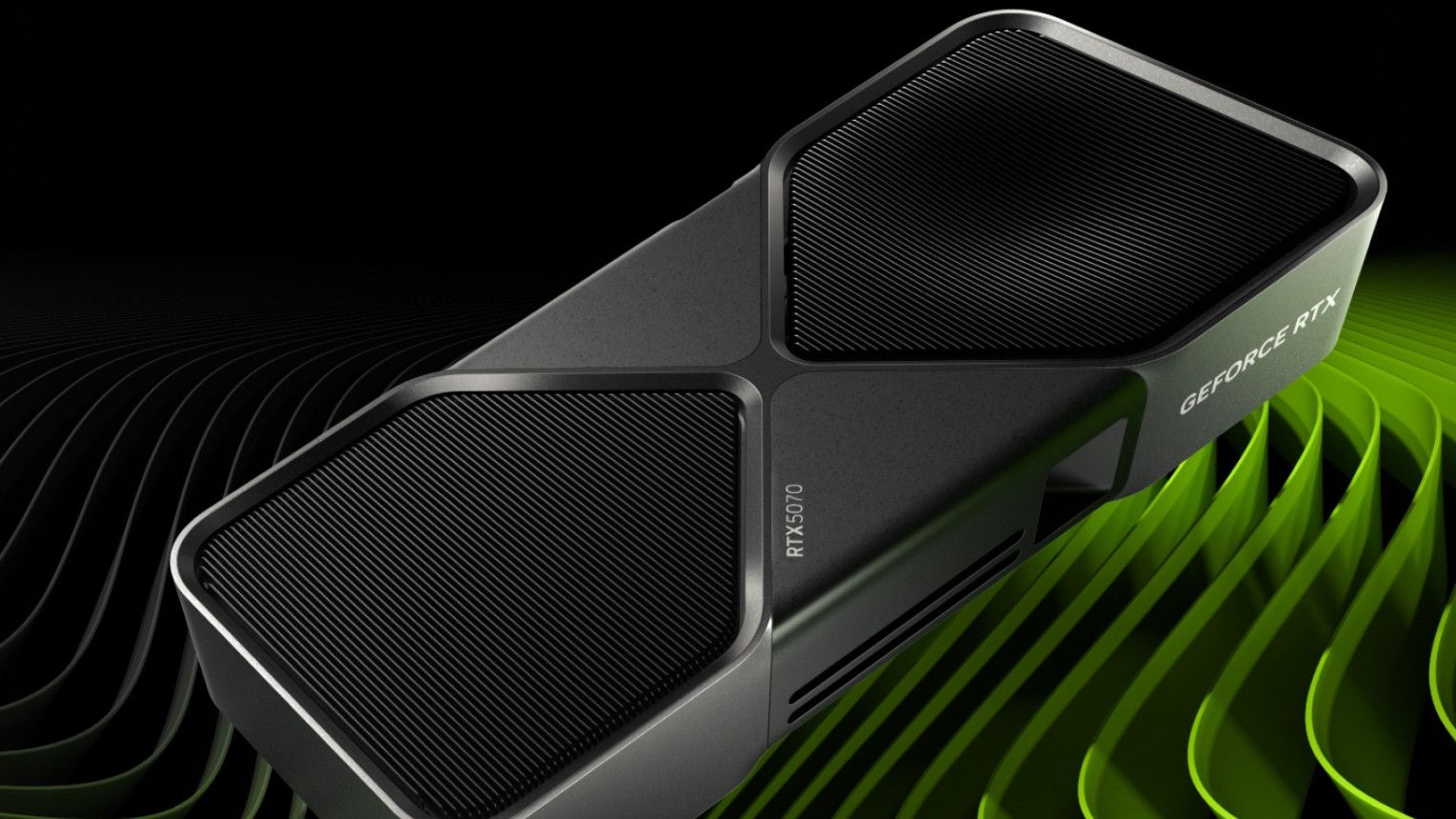
Both graphics cards are built on the Blackwell architecture and belong to the same generation, but they differ significantly in performance, VRAM capacity, and price. In this article, we compare what each model offers and whether the higher-end version is worth the extra cost.
GeForce RTX 5070 launched in March 2025 as a graphics card for high-performance 1440p gaming with reasonable power consumption. GeForce RTX 5070 Ti arrived on February 20, 2025 and targets 4K gaming and resource-intensive workloads. In the overall performance rating, RTX 5070 Ti leads RTX 5070 by 13%: 77.64 points versus 68.83.
Technical specifications
Graphics processor
| Parameter | RTX 5070 | RTX 5070 Ti |
|---|---|---|
| GPU | GB 205 | GB 203 |
| CUDA cores | 6 144 | 8 960 |
| Boost frequency | 2,512 MHz | 2,452 MHz |
| RT cores | 48 | 70 |
| Tensor Cores | 192 | 280 |
| AI TOPS | 988 | 1 406 |
| Process technology | 5 nm | 5 nm |
| TDP | 250 W | 300 W |
RTX 5070 Ti has 45% more streaming processors (8,960 vs 6,144), which gives it an advantage in heavy scenarios.
VRAM capacity and type
| Parameter | RTX 5070 | RTX 5070 Ti |
|---|---|---|
| Memory type / capacity | GDDR7 / 12 GB | GDDR7 / 16 GB |
| Memory bus | 192-bit | 256-bit |
| Bandwidth | 672 GB/s | 896 GB/s |
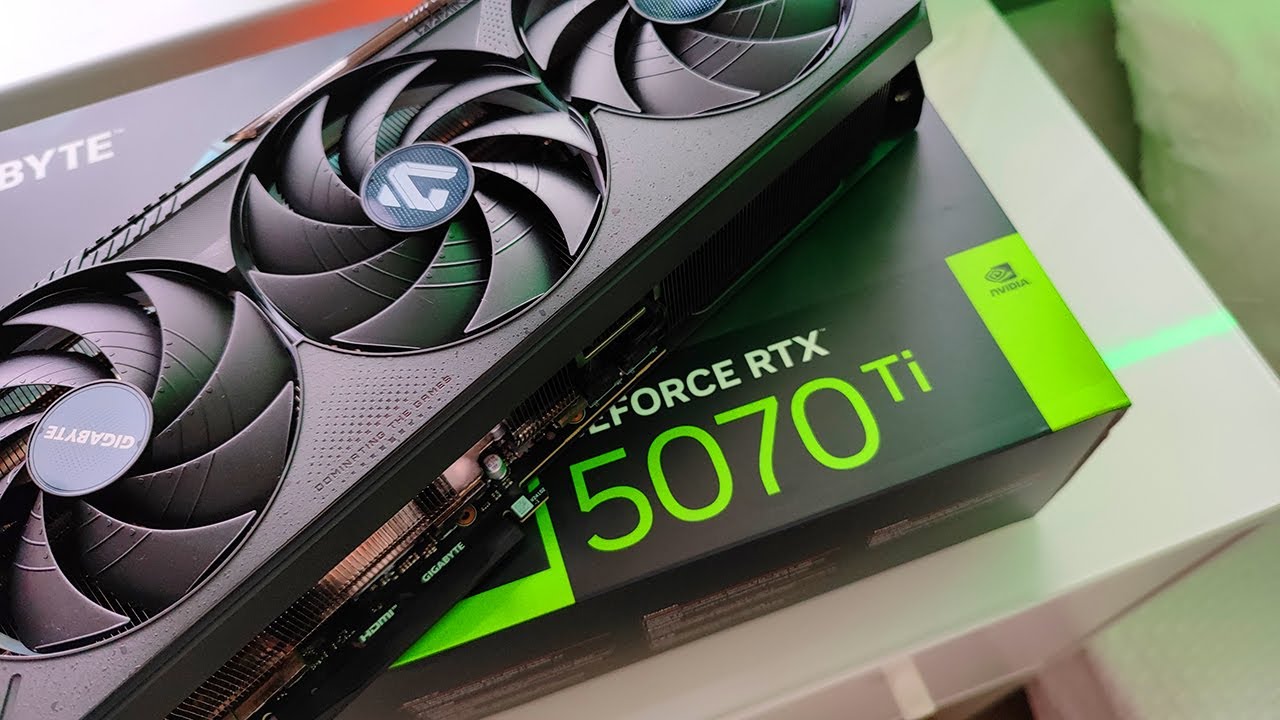
The VRAM difference is fundamental: 16 GB of VRAM on a 256-bit bus gives the Ti 33% higher bandwidth. For 4K at ultra settings in modern games, 12 GB is already close to the limit — some titles are approaching it today. The Ti model provides enough headroom for the next 3–4 years.
Connectivity and outputs
The output set is identical on both cards: 1× HDMI 2.1b and 3× DisplayPort 2.1b. The connection interface is PCIe 5.0 x16. Both models use a safe 1× 16-pin (12V-2x6) ATX 3.1 power connector, which requires the cable to be firmly seated to avoid overheating. API support is also the same: DirectX 12 Ultimate, Vulkan 1.4, CUDA 12.0, OpenCL 3.0.
Gaming performance
Tests without ray tracing
According to tests across 13 games (Ryzen 9 9900X platform):
- 1080p: RTX 5070 Ti — 122.9 fps vs 103.4 fps on RTX 5070 (+19%)
- 1440p: 97 fps vs 77.4 fps (+25%)
- 4K: 57.6 fps vs 43.6 fps (+32%)
The gap grows as resolution increases — 4K is where the Ti shows its full strength.
Tests with ray tracing
- 1440p RT: RTX 5070 Ti — ~88.5 fps vs ~69.8 fps on RTX 5070 (+27%)
- 4K RT: ~48.9 fps vs ~36.4 fps on RTX 5070 (+34%)
RTX 5070 Ti is equipped with 70 fourth-generation RT cores versus 48 on the base card. In Cyberpunk 2077 Path Tracing mode at 4K, the difference is especially noticeable: RTX 5070 already needs DLSS for comfortable gameplay, while the Ti handles it more confidently.
Average gaming performance
| Resolution | RTX 5070 | RTX 5070 Ti | Difference |
|---|---|---|---|
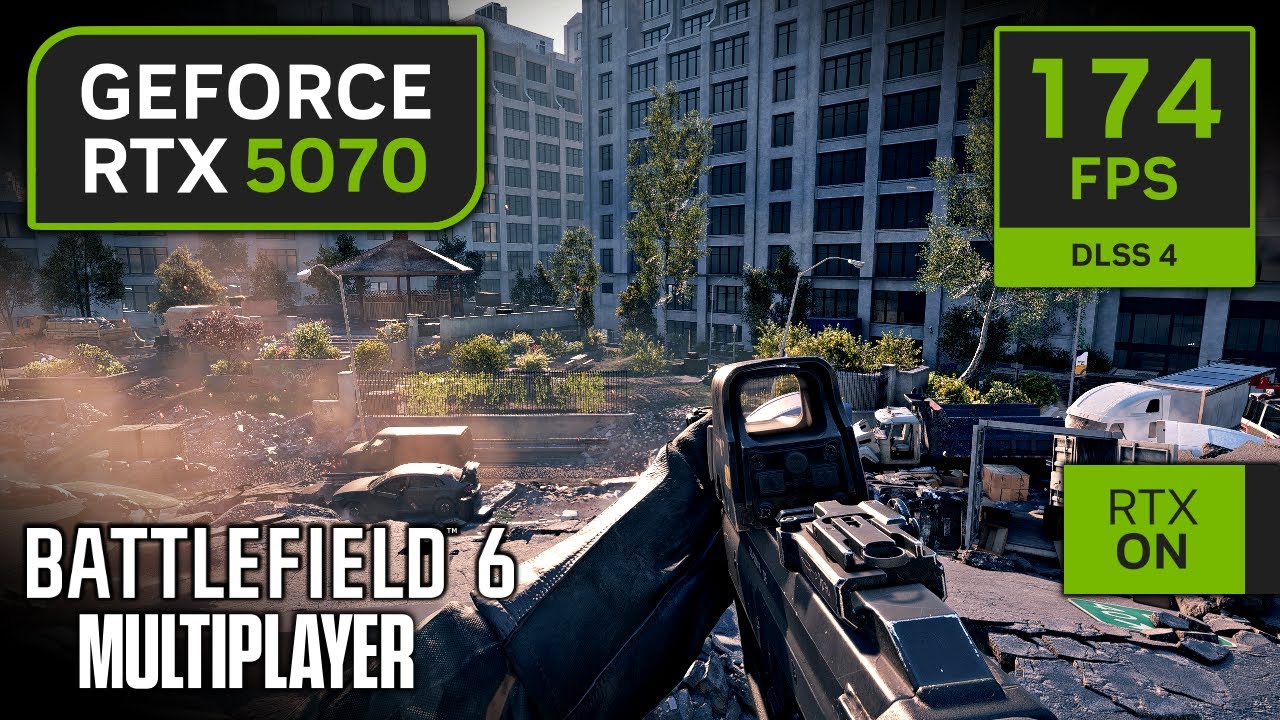
| 1080p | 103 fps | 123 fps | +19% |
| 1440p | 77 fps | 97 fps | +25% |
| 4K | 44 fps | 58 fps | +32% |
| 1440p + RT | 70 fps | 89 fps | +27% |
| 4K + RT | 36 fps | 49 fps | +34% |
Performance comparison
Performance in 1080p
At 1080p, both cards are excessive for most games — both options deliver 100+ fps even in demanding titles. The 19% difference exists, but it is not visually critical. Buying the Ti specifically for 1080p is not practical.
Performance in 1440p
The target resolution for both cards is 1440p. Here, the Ti is 25% ahead of the base model. For 165 Hz monitors, the Ti provides noticeably more headroom; RTX 5070 confidently covers 1440p/144 Hz in most games without ray tracing.
Performance in 4K
At 4K, the gap reaches 32%. In demanding games, RTX 5070 drops below 45 fps at ultra settings, while the Ti maintains a stable 57+ fps. For comfortable 4K gaming without DLSS, the Ti is preferable.
Power consumption and thermals
RTX 5070 consumes 250 W and requires a quality PSU rated from 600 W, making it an ideal option for compact mATX and ITX builds. RTX 5070 Ti, with a 300 W TDP, will require a reliable 700–750 W PSU. It is strongly recommended to use high-quality new-standard ATX 3.1 power supplies with a 12V-2x6 connector, inserting the power cable fully and firmly. In fps/W, RTX 5070 is more efficient: less heat, quieter fans. The TDP difference is 50 W, which noticeably affects temperatures and noise levels under sustained load.
DLSS and its impact on performance
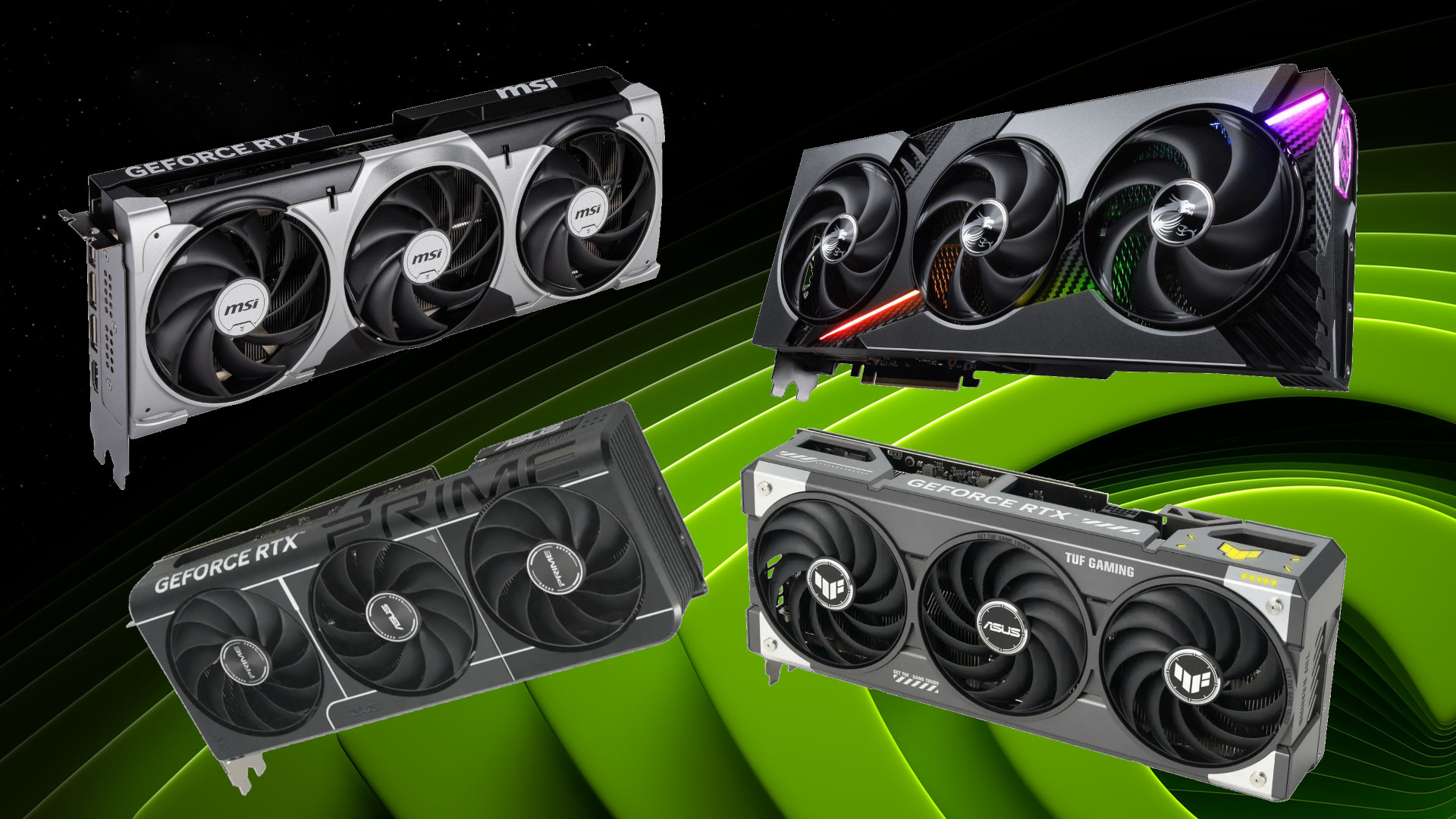
Both cards support DLSS 4 and DLSS 4.5 with Dynamic Multi Frame Generation, a technology for dynamically generating multiple intermediate frames. In practice, this lets RTX 5070 in DLSS Quality mode deliver results comparable to native 4K on previous-generation cards. Thanks to more Tensor Cores (280 vs 192) and a 42% advantage in AI TOPS, RTX 5070 Ti handles AI tasks faster: LLM token generation is 40% higher, and Stable Diffusion is significantly faster. For gamers who combine gaming with local AI tools, this is a strong argument in favor of the Ti.
Price and availability
| Model | Price (June 2026) | Price/value |
|---|---|---|
| RTX 5070 | 2,700–3,260 AED | 73.89 |
| RTX 5070 Ti | 4,050–5,360 AED | 60.21 |
RTX 5070 offers better price/performance in the Russian retail market. With a raw performance difference of 19–32%, the price gap is about 50%, which is the key argument for most buyers.
Who should choose RTX 5070 or RTX 5070 Ti?
RTX 5070 Ti is your choice if:
- You play at 4K and want stable 60+ fps without DLSS
- You plan to keep the card for 4+ years — 16 GB of VRAM provides future headroom
- You use ray tracing in demanding titles
- You combine gaming with AI tasks, Stable Diffusion, or LLMs
HYPERPC offers custom ready-made PC configurations with RTX 5070 Ti in the PLAY 1 PRO, PLAY 1 ULTRA, and LUMEN 7 series.
RTX 5070 is your choice if:
- Your main resolution is 1440p/144 Hz
- A quiet and efficient build is important to you (mATX, ITX)
- Your budget is limited, and 12 GB of VRAM is enough for you
- You actively use DLSS 4 to increase fps
You can also purchase the following HYPERPC PCs with an RTX 5070 graphics card: GAMING, LUMEN 5, PLAY 3 MAX.
Final criteria comparison
| Criterion | RTX 5070 | RTX 5070 Ti |
|---|---|---|
| 1440p performance | ✓ Excellent | ✓✓ Super |
| 4K performance | ◑ Sufficient | ✓✓ Excellent |
| VRAM / bus | 12 GB / 192-bit | 16 GB / 256-bit |
| Bandwidth | 672 GB/s | 896 GB/s |
| Energy efficiency | ✓✓ Better | ✓ Good |
| Price / performance | ✓✓ Better value | ◑ More expensive |
| AI / Tensor | 988 AI TOPS | 1 406 AI TOPS |
| Long-term headroom | ◑ 3 years | ✓✓ 4+ years |
Frequently asked questions We have prepared the answers.
-
Is it worth paying extra for the Ti for 1440p?
No. RTX 5070 confidently covers 1440p/144 Hz. The Ti is justified for 4K or a 4+ year planning horizon.
-
Is 12 GB of VRAM enough in 2026?
For most games, yes. But some modern titles at maximum settings in 4K come very close to this limit. If 4K is a priority, choose the Ti with 16 GB.
-
Does the memory bandwidth difference affect real fps?
Yes, especially in 4K. The 33% bandwidth gap (896 vs 672 GB/s) directly affects performance at high resolutions.
-
Can RTX 5070 be used for working with LLMs?
Yes, but RTX 5070 Ti with 1,406 AI TOPS and 16 GB of VRAM handles larger models and generates tokens 40% faster.

 Arabic
  English