We are ready to help you
Comparison of AMD Radeon RX 9070 and GeForce RTX 5070 graphics cards
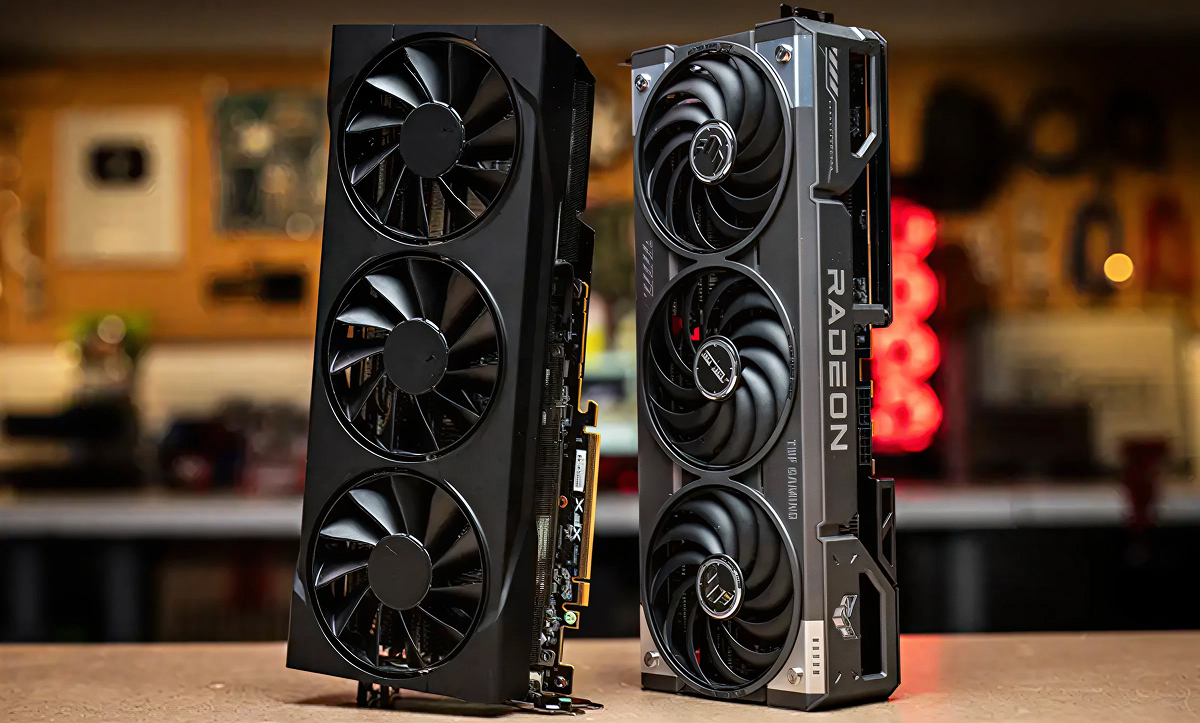
Choosing a new graphics card in 2026 is not just a hardware purchase, but a strategic decision between raw computing power and artificial intelligence. In this article, we will run a detailed comparison to determine what is ultimately better for the user: honest FPS in native resolution from AMD or an advanced ecosystem and upscaling from NVIDIA. This is a clash of two philosophies, where one brand bets on memory capacity, while the other bets on neural-network technologies.
Overview and key differences
A closer look makes it clear that AMD Radeon RX 9070 XT and RTX 5070 represent fundamentally different engineering approaches. The main difference lies in the chip structure: Navi 48 versus GB205. With RDNA 4, the red team finally moved away from the ultra-premium segment and focused on the mass market, where efficiency matters. The monolithic Navi 48 die is tuned for classic rasterization and equipped with a wide 256-bit bus, allowing it to stay ahead of competitors in heavy graphics modes without relying on helper algorithms.
At the same time, GeForce based on the Blackwell architecture continues to develop AI computing. The chip is more compact, but its transistor density is higher. A substantial part of the silicon is dedicated to new tensor cores with FP4 support and next-generation GDDR7 memory controllers. If we are comparing the devices by their purpose, then Radeon is the choice for those who value traditional gaming and native FPS, while GeForce is a solution for fans of ray tracing and frame generation. VRAM capacity remains an important hardware difference: a full 16 GB from AMD versus 12 GB from the green team. In the realities of 2026, this factor becomes decisive when choosing a high-resolution monitor.
Price and performance
At the moment, price per frame is becoming a key economic factor. In spring 2026, the retail price of the RTX 5070 starts at 2,700 AED, while the RX 9070 XT starts at 3,030 AED. Despite the higher shelf price, the RX 9070 XT shows better value than the RTX 5070. At 1440p, the cost of one frame on Radeon is about 29 AED, while the opponent’s figure is 30 AED.
At 4K, the value gap remains and even increases. AMD delivers 1 FPS for 43 AED, while the solution from NVIDIA costs 45 AED. Therefore, if you are looking for the most gaming performance for every dirham spent, the XT version looks preferable. NVIDIA products cost less only at the entry point, but in the long term they may fall behind because of the faster obsolescence of the 12 GB buffer.
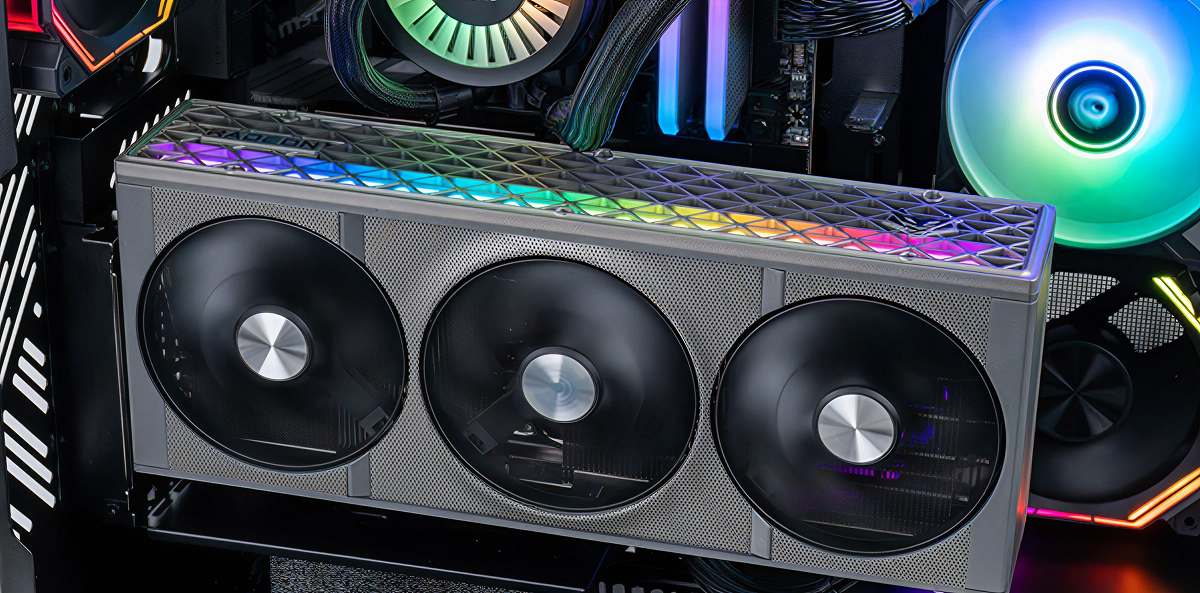
Technical specifications
For those who are used to comparing devices by raw numbers, we have prepared detailed specifications.
General information
| Specification | Radeon RX 9070 XT | GeForce RTX 5070 |
|---|---|---|
| Architecture | AMD RDNA 4 | NVIDIA Blackwell |
| Process node | TSMC N4P (4 nm) | TSMC 4N (4 nm) |
| Interface | PCI-E 5.0 x16 | PCI-E 5.0 x16 |
| TDP (rated) | 304 W | 250 W |
| Recommended PSU | 750-850 W | 650-700 W |
Graphics processor
| Component | Radeon RX 9070 XT | GeForce RTX 5070 |
|---|---|---|
| Die (core) | Navi 48 XTX | GB205-300-A1 |
| Transistor count | 53.9 billion | 31.1 billion |
| Shader cores | 4096 | 6144 |
| RT cores | 64 (3rd generation) | 48 (4th generation) |
| Tensor cores | 112 | 192 |
| Game clock | 1660–2970 MHz | 2325–2512 MHz |
Memory and API
| Parameter | Radeon RX 9070 XT | GeForce RTX 5070 |
|---|---|---|
| Memory capacity | 16 GB | 12 GB |
| Memory type | GDDR6 | GDDR7 |
| Memory bus | 256-bit | 192-bit |
| Bandwidth | 640 GB/s | 672 GB/s |
| API support | DX 12 Ultimate, Vulkan | DX 12 Ultimate, Vulkan |
Although the memory on NVIDIA is formally faster thanks to the GDDR7 standard, the physical capacity of 16 GB from AMD allows it to confidently outpace the competitor in scenarios using 4K textures.
Gaming performance
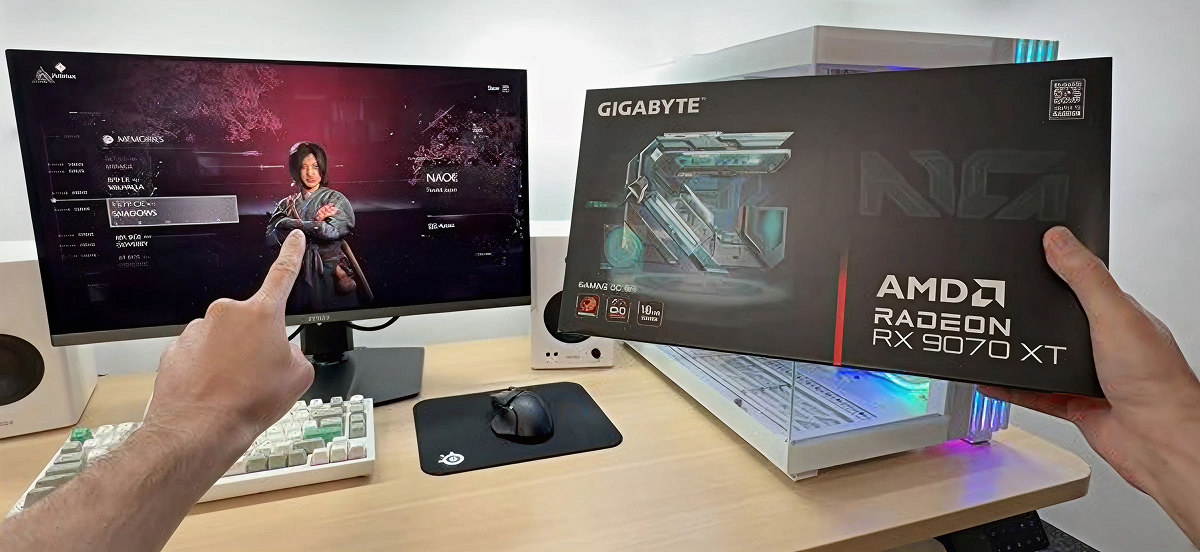
Tests without ray tracing
In classic rendering scenarios (rasterization), AMD Radeon RX 9070 XT demonstrates a decisive lead. At 1440p, the average advantage over the RTX 5070 is about 18%. RDNA 4 is especially noticeable in projects with huge open worlds, where the speed of filling a scene with objects matters.
| Game (1440p, Ultra) | RX 9070 XT (FPS) | RTX 5070 (FPS) | Leader |
|---|---|---|---|
| God of War: Ragnarok | 163 | 130 | AMD (+25%) |
| Cyberpunk 2077 | 125 | 98 | AMD (+27%) |
| Horizon Forbidden West | 118 | 99 | AMD (+19%) |
| Black Myth: Wukong | 82 | 72 | AMD (+14%) |
| Counter-Strike 2 | 251 | 300 | NVIDIA (+19.5%) |
| Baldur's Gate 3 | 156 | 139 | AMD (+12%) |
Tests with ray tracing
Enabling ray tracing significantly changes the balance of power. In heavy modes such as Path Tracing, the Blackwell architecture performs better. However, in standard RT scenarios, Radeon often pulls ahead of the competitor thanks to more compute blocks and RDNA 4 optimizations.
| Game (1440p, RT High) | RX 9070 XT (FPS) | RTX 5070 (FPS) | Result |
|---|---|---|---|
| Alan Wake 2 (PT) | 30 | 39 | NVIDIA (+30%) |
| Assassin's Creed Shadows | 62 | 47 | AMD (+32%) |
| Cyberpunk 2077 (RT Ultra) | 68 | 58 | AMD (+17%) |
| Marvel's Spider-Man 2 | 62 | 54 | AMD (+15%) |
| Doom: The Dark Ages | 81 | 68 | AMD (+19%) |
Results in popular games
If we look at the comparison at 4K, the gap between RX 9070 XT and RTX 5070 becomes critical for comfortable gameplay. 12 GB of VRAM on GeForce leads to buffer overflow in games such as A Plague Tale: Requiem or Hogwarts Legacy, causing noticeable stutters. At the same time, 16 GB from AMD allows you to set maximum texture quality without concern.
In Monster Hunter Wilds, AMD delivers an average of 65 FPS while NVIDIA shows only 54. To achieve smoothness, owners of GeForce have to enable an upscaler, while Radeon handles native rendering. AMD’s machine-learning-based FSR Redstone technology has almost caught up with DLSS 4.5 in static image quality in 2026, although in motion, NVIDIA algorithms still retain a small sharpness advantage.
Benchmarks
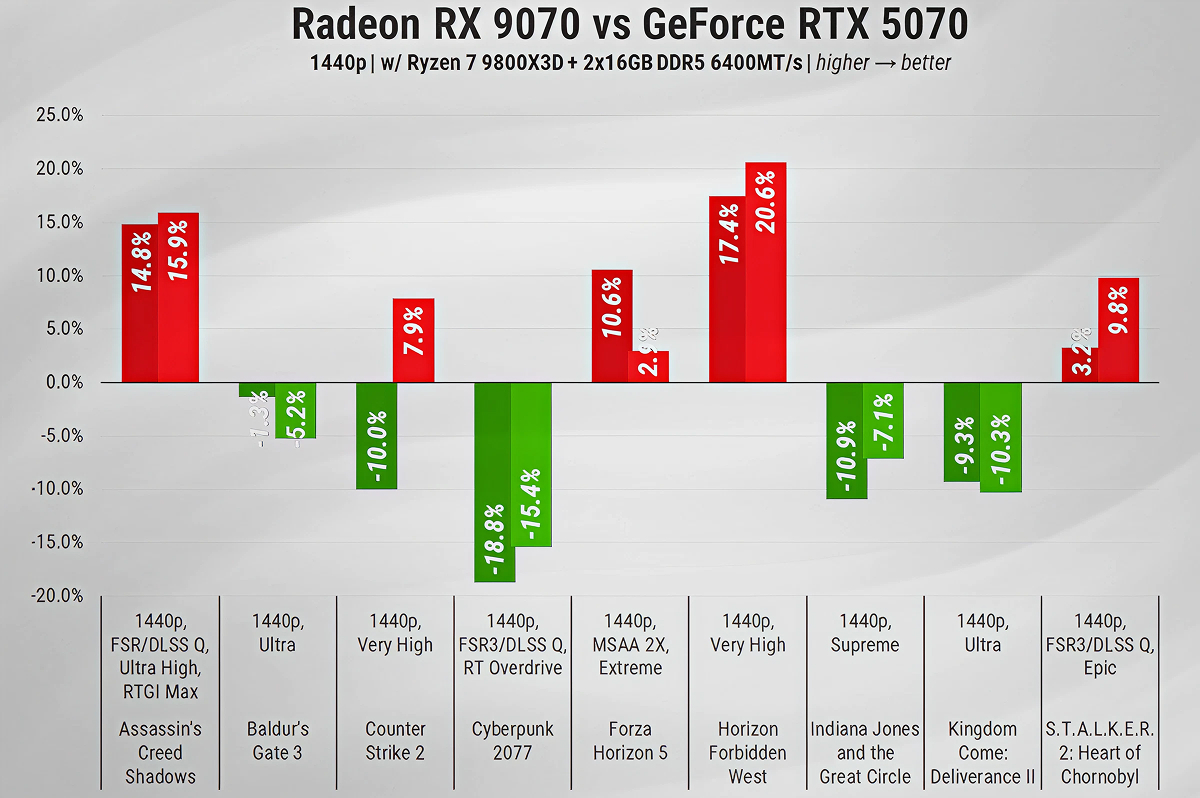
Synthetic tests
In synthetic suites, AMD Radeon RX 9070 XT leads in rasterization speed and geometry tests. However, in specialized tasks such as AI inference (Procyon AI Vision), the RTX 5070 outpaces its rival by more than twice. This confirms NVIDIA as the best choice for those who not only play games, but also experiment with local neural networks.
3DMark and other test results
In the classic Time Spy test, AMD Radeon RX 9070 XT reaches about 36 TFLOPS of total power, while the RTX 5070 stops at 31 TFLOPS. However, in Blender rendering the situation is reversed: NVIDIA scores 6172 points versus 3274 for AMD. Optimization of the Cycles engine for CUDA and OptiX gives a twofold advantage. In the Unreal Engine 5.5 test, Radeon takes revenge again, showing 93 FPS versus the opponent’s 75, making it an excellent choice for game developers using this engine.
Power consumption and system requirements
In terms of energy efficiency, NVIDIA looks more attractive for quiet builds. A 250 W TDP allows the use of more modest cooling systems.
| Operating mode | RTX 5070 (W) | RX 9070 XT (W) |
|---|---|---|
| System idle | ~12 | ~10 |
| Regular gaming | 229 | 303 |
| Gaming with RT | 254 | 351 |
The cooling system on AMD requires a more spacious case with better airflow. For the XT version, we can recommend power supplies rated from 750 to 850 W. The card from NVIDIA is more forgiving and can run with a quality 650 W PSU. It is also worth noting undervolting potential: lowering the voltage by 75 mV on the RX 9070 noticeably reduces temperatures, while the RTX 5070 allows power consumption to be reduced by 30% while keeping stock performance levels.
Comparison with competitors
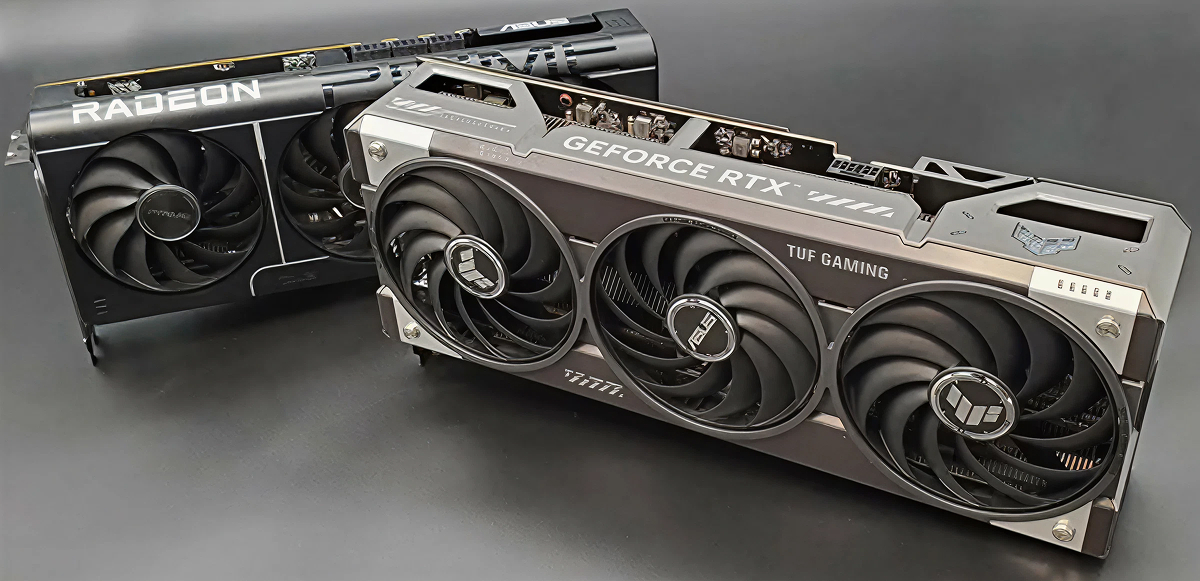
In the 2026 hierarchy, RTX 5070 is the direct successor to the RTX 4070 Ti Super, offering the same speed but with an updated AI stack. In turn, the RX 9070 XT successfully competes with more expensive previous-generation models such as the RX 7900 GRE or even the RX 7900 XT. Upgrading to these new cards makes sense if your current graphics card has less than 10 GB of VRAM or belongs to the RTX 3070 generation or lower. For owners of the 4000 series, the upgrade may only be justified if there is an acute memory shortage at 4K resolution.
User opinions and reviews
Users online often note that AMD has made a “small revolution” in ray tracing this generation and is no longer an outsider. Owners of the RTX 5070 praise flawless DLSS 4.5 operation and the NVENC encoder in reviews, which is indispensable for streaming on Twitch and YouTube. Buyers of the RX 9070 XT emphasize “honest hardware”: they are glad that 16 GB of memory allows them not to use upscalers where the competitor is forced to lower the render resolution.
Conclusion and recommendations
To summarize, we can draw the following conclusions.
- We recommend the AMD Radeon RX 9070 XT, if your main goal is uncompromising gaming in 1440p and 4K with maximum future headroom. This is the best choice for those who want to get the most “raw” hardware without paying extra for the brand.
- Choosing the GeForce RTX 5070 is justified if you actively use your PC as a work tool for rendering, streaming, or AI training. Its strengths are software, the ecosystem, and best-in-class energy efficiency.
Frequently asked questions (FAQ)
-
What is better for 4K gaming in 2026?
Definitely the RX 9070 XT, thanks to 16 GB of VRAM and higher raster performance.
-
Is 12 GB of memory enough on the RTX 5070?
For 1440p, this capacity is enough, but in 4K with maximum textures you will run into limits.
-
Which card is better for video editing?
It depends on the codecs. For H.264/H.265 AMD is often faster; for RAW and special effects, NVIDIA is better.
-
What should you choose for Blender and neural networks?
The RTX 5070, because of the CUDA ecosystem and tensor cores.
-
Do you need a new PSU for the RX 9070 XT?
If your current unit is below 750 W, replacement is strongly recommended.
Gaming PCs with RTX 5070

 Arabic
  English