We are ready to help
Best AM4 Motherboards in 2026: Top Choices for PC Builds
Why Is the AM4 Platform Still Relevant in 2026?
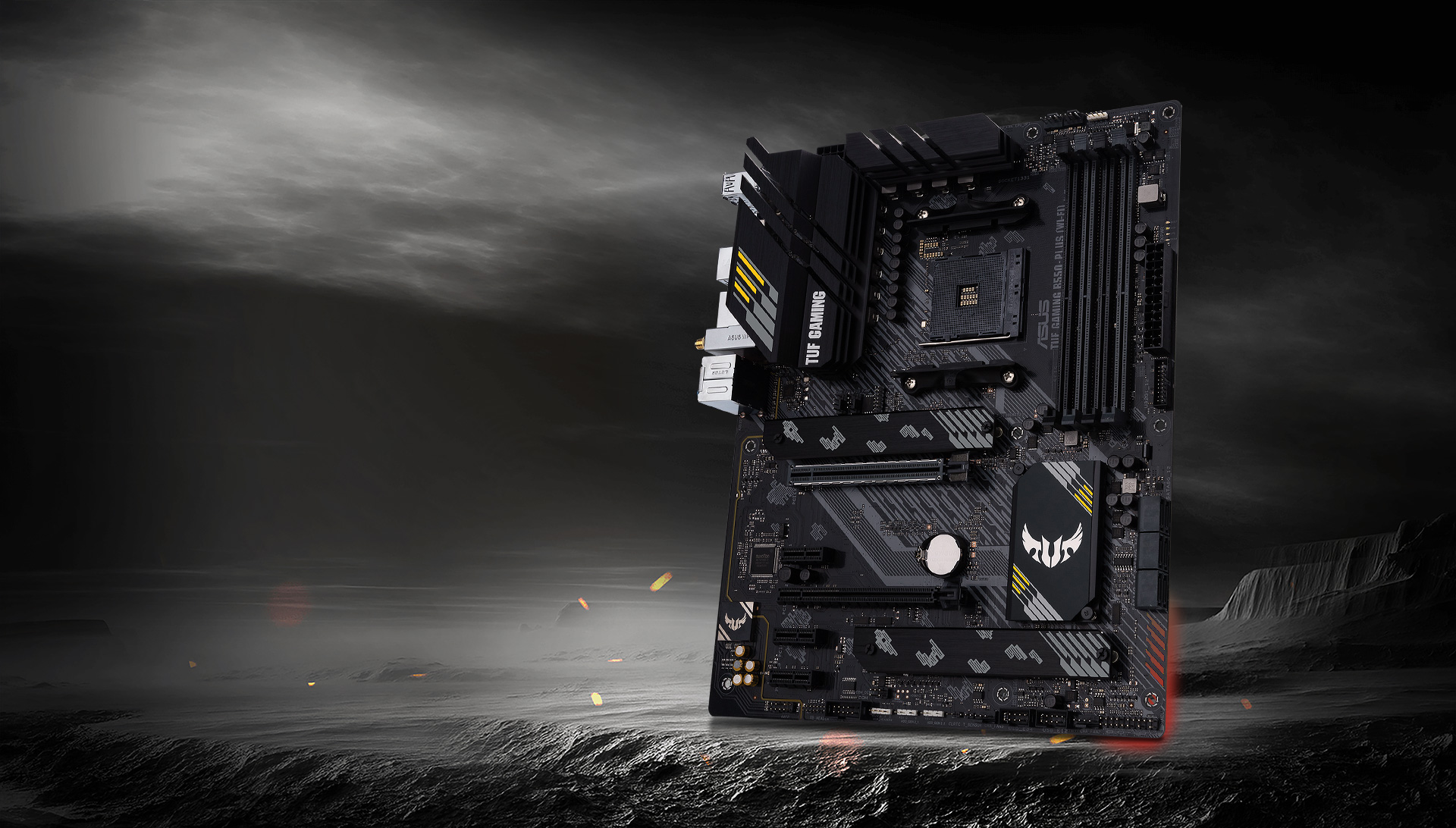
In 2026, amid the rapid development of high-performance computing systems, socket AM4 continues to hold its position as the most rational and economically justified platform for a wide range of tasks.
The technical side has not lost its relevance. Flagship solutions, such as Ryzen 5000 series processors, and in particular the Ryzen 7 5700X3D, thanks to integrated 3D V-Cache technology with 96 MB of L3 cache, deliver a gaming performance boost that still serves as a benchmark for many modern titles.
By choosing AM4 today, users get a time-tested ecosystem in which every element, from power phases to expansion slots, has gone through careful refinement and optimization. It is an ideal choice for those who value stability and predictable system behavior, qualities often missing from brand-new platforms that have only just entered the market.
What to Look for When Choosing an AM4 Motherboard Today
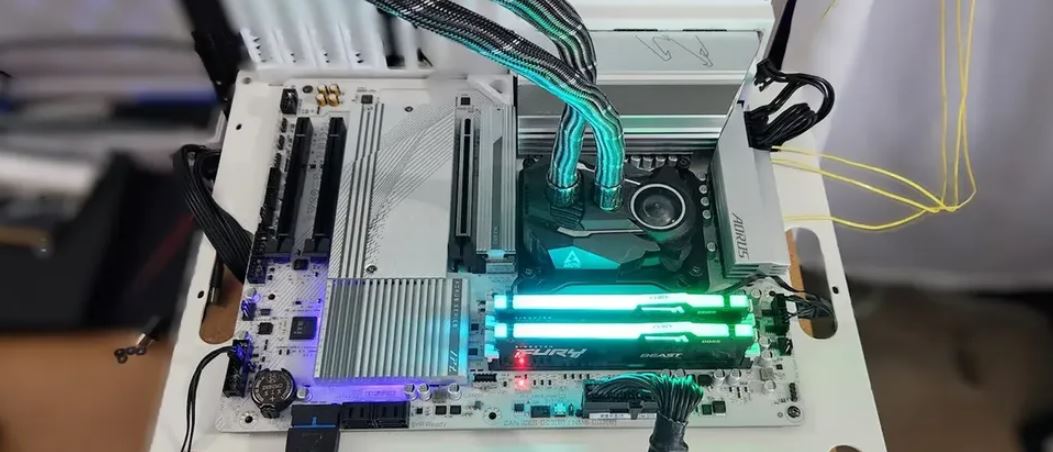
When choosing a motherboard, many details matter because they directly affect the future longevity and performance of the entire computer system.
- VRM Cooling and Power Delivery: The VRM (Voltage Regulator Module) zone is responsible for converting voltage for the processor. When installing powerful 8-core CPUs such as the Ryzen 7 5700X3D, whose real power draw under load reaches roughly 115 W, large aluminum heatsinks are critical. Running a power-hungry X3D chip on budget boards without MOSFET heatsinks, such as the MSI B450M-A PRO MAX II, can push the power delivery area above 100 degrees. This will trigger severe CPU throttling with frequency drops and FPS loss, and under prolonged load it can create a risk of PCB burn-through, short circuit, and fire across the system.
- PCIe 4.0 Interface Support: Support for PCIe 4.0 remains essential for modern systems, but chipsets B450 and A520 are limited in hardware to PCIe 3.0. To unlock the speed of modern graphics cards with reduced x8 lane configurations and fast Gen4 SSDs, which on PCIe 3.0 will be limited to 3500 MB/s instead of 7000 MB/s, you need a motherboard based on the B550 or X570 chipset.
- BIOS Flashback Feature: This is an essential tool for any user. The standalone BIOS update button, called Q-Flash Plus on Gigabyte boards, lets you update firmware from a USB flash drive without installing a CPU or RAM. This is critical because the Ryzen 7 5700X3D was released in 2024 and older boards will not recognize it. If the board lacks Flashback such as on the Gigabyte A520M K V2, you will have to find an older processor just to perform the update.
- Expansion Ports and M.2 Slots: When choosing a board, pay attention to the number and speed of M.2 ports. Having at least two slots, preferably with PCIe 4.0 x4 support, will let you expand storage capacity in the future without replacing the motherboard.
- Audio and Network Adapter Quality: For a gaming PC, a good audio codec, such as Realtek ALC1200 or ALC1220, and a network controller supporting speeds up to 2.5 Gbit/s are important because they provide a stable connection in online games.
- PCI-Express Slots and Reinforcement: If you plan to install a large graphics card, it is worth choosing a board with a reinforced PCIe slot protected by a steel frame. This prevents PCB deformation under the weight of a heavy graphics accelerator.
Comparison of Motherboard Segments
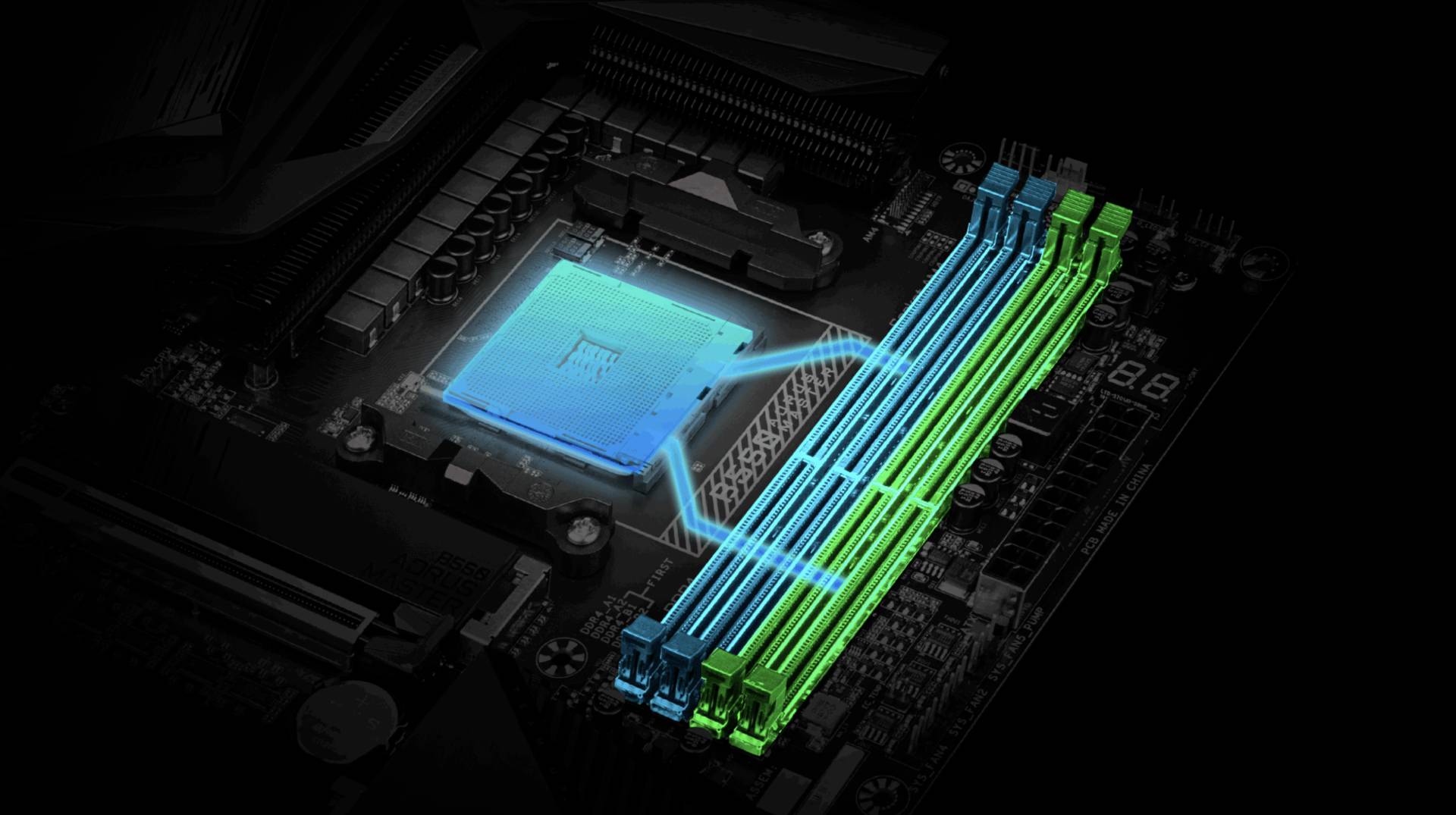
For clarity, here is a comparison table of the main chipsets available for the AM4 platform this year:
| Segment | Chipset | Technical Capabilities | Ideal Use |
|---|---|---|---|
| Entry-Level | A520 | Limited power delivery, PCIe 3.0, no CPU overclocking | Office use, light home media center |
| Budget | B450 | CPU and RAM overclocking, no PCIe 4.0 support | Mid-range gaming, upgrading older systems |
| Mid-Range | B550 | PCIe 4.0 support, good VRM, RAM/CPU overclocking | Modern gaming PCs, Ryzen 7 5700X3D |
| High-End | X570 | Full PCIe 4.0 across all slots, maximum port selection | Workstations, extreme overclocking |
Budget Options: Maximum Savings (A520 and B450)
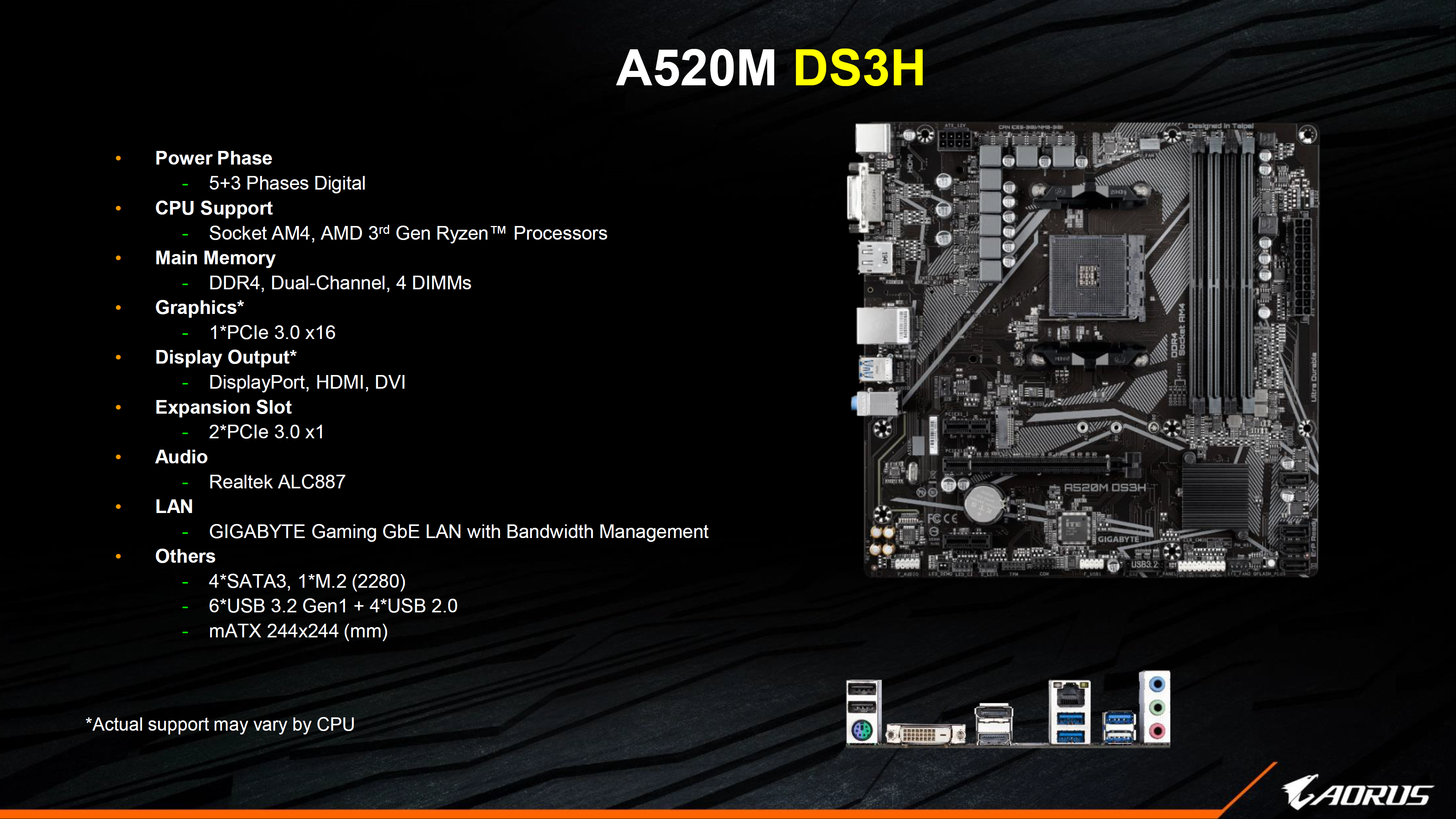
The budget segment is aimed at users building a PC with minimal spending, where every dirham matters. Using A520 or B450 chipsets means giving up some advanced features, but that does not stop them from being a reliable foundation for budget gaming.
- Gigabyte A520M K V2: This model is an example of an ultra-budget approach. The micro-ATX board is based on the A520 chipset, is limited to PCIe 3.0, and lacks the BIOS Flashback (Q-Flash Plus) feature. It has a simple power delivery system and is suitable only for energy-efficient processors such as Ryzen 5 3600/5500 without overclocking.
- MSI B450M-A PRO MAX II: A board that has earned trust in the budget segment. In revision “II,” it received a significant and unexpected upgrade: a gaming Realtek RTL8125BG network controller with speeds up to 2.5 Gbit/s. It also includes a Flash BIOS Button (BIOS Flashback) for easy firmware updates for Ryzen 5000. However, the complete lack of VRM heatsinks makes it extremely risky for installing a Ryzen 7 5700X3D.
- Important Note: When choosing these boards, remember that the lack of PCIe 4.0 will limit the bandwidth of modern graphics cards and fast SSDs, cutting storage speeds in half to 3500 MB/s.
Mid-Range Segment — B550 Chipset (The Sweet Spot)
The B550 chipset is currently the most balanced choice. It offers everything needed for modern gaming, including fast data transfer support and broad system tuning options.
- Gigabyte B550M DS3H: This model can be considered a “people’s choice” motherboard. In revisions 1.0–1.5, it used a digital power delivery system with a “5+3 phase” design and a low-profile heatsink. In the newer 1.7 revision, the power design was reworked to “6+2 phases.” At a price of around 370–420 AED, it offers basic stability and Q-Flash Plus, but when installing a Ryzen 7 5700X3D, its VRM can get very hot under heavy load.
- MSI B550M PRO-VDH WIFI: A popular mid-range model priced at 400–470 AED, equipped with an integrated Wi-Fi module and a Lightning Gen4 x4 M.2 slot. However, the board has a hidden catch: according to the official compatibility list, it categorically does not support older processors with integrated graphics based on the Zen+ architecture, such as Ryzen 5 3400G and Ryzen 3 3200G.
High-End Models for Powerful Builds (Advanced B550)
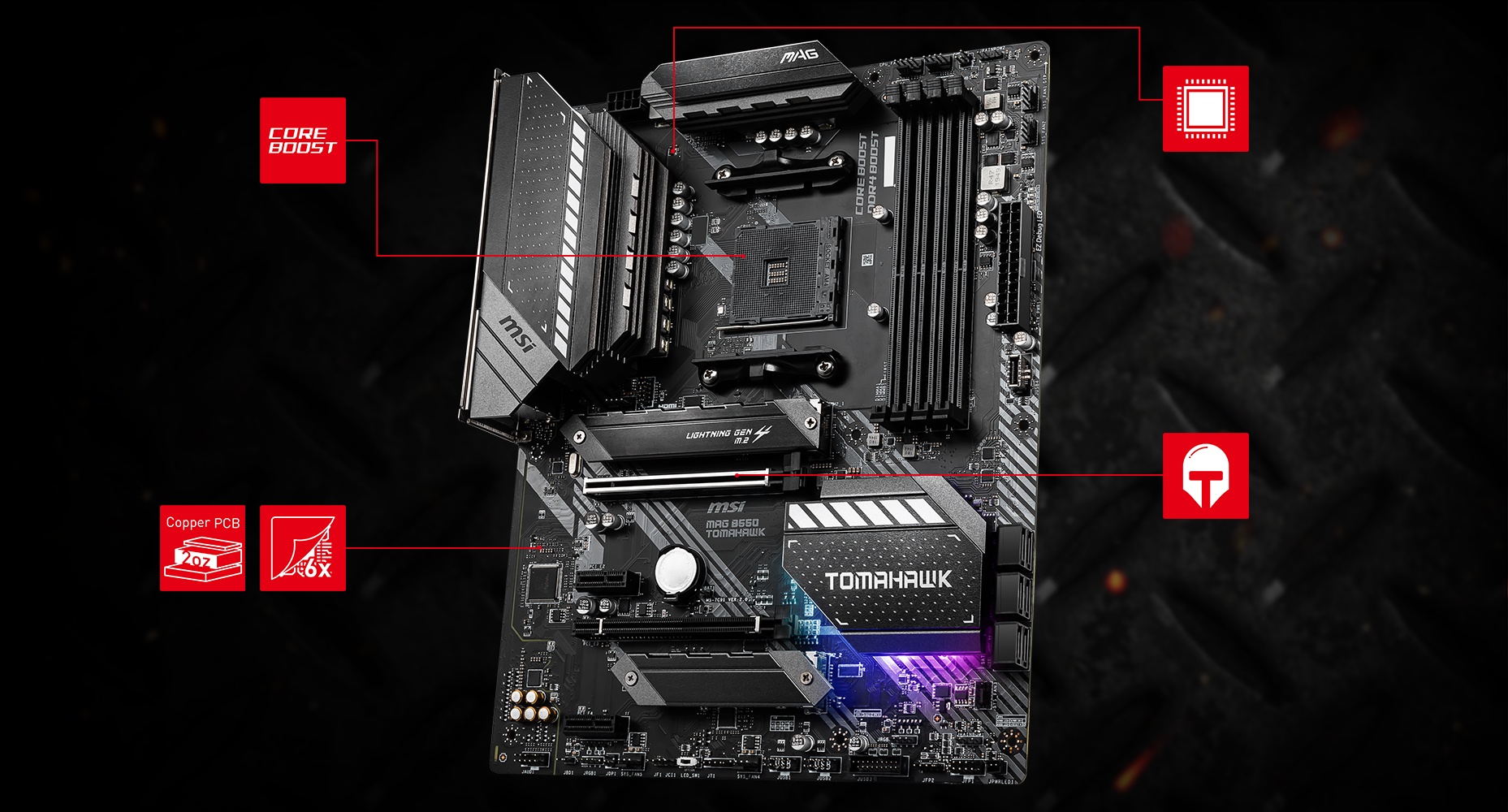
If your goal is a high-performance gaming PC that can maintain high Ryzen 7 5700X3D CPU frequencies for a long time, you should not save on the motherboard. Advanced B550 solutions offer better power delivery and cooling components.
- Gigabyte B550 AORUS Elite V2: A full-size ATX board with a reinforced 12+2-phase power delivery subsystem and massive heatsinks. It is well suited for powerful gaming systems and ensures stable CPU operation without frequency drops.
- MSI MAG B550 TOMAHAWK: A reference-class motherboard for enthusiasts. Its powerful 10+2+1-phase Duet Rail Power System, large metal heatsinks, and BIOS Flashback support make it the “gold standard” for the AM4 platform. It lets you extract the absolute maximum from the Ryzen 7 5700X3D.
Integration of Ready-Made HYPERPC Solutions
For users who value their time and do not want to dive into the technical complexity of selecting components, flashing BIOS firmware, and fine-tuning hardware, the best option is to turn to professionals. New branded PCs from HYPERPC are assembled exclusively on current sockets.
Among the company’s modern balanced configurations are:
- HYPERPC PLAY 4 — a high-performance system based on the latest 14-core Intel Core Ultra 5 245K processor and an MSI MAG B860 TOMAHAWK motherboard for DDR5 RAM.
- HYPERPC PLAY 1 PLUS — an excellent entry-level gaming computer based on the Core i5-12400F and a reliable ASUS PRIME B760M-A motherboard with DDR4 memory.
- HYPERPC PLAY 4 PLUS — a perfectly balanced PC with an Intel Core i5-14400F processor, MSI B760 GAMING PLUS motherboard, and modern RTX 5060 Ti graphics card.
- HYPERPC PLAY 4 ULTRA — an uncompromising AMD AM5 platform system with the top gaming Ryzen 7 7800X3D processor, an ASUS TUF B850-PLUS motherboard, and an RTX 5080 graphics card.
Conclusion — Selection Summary
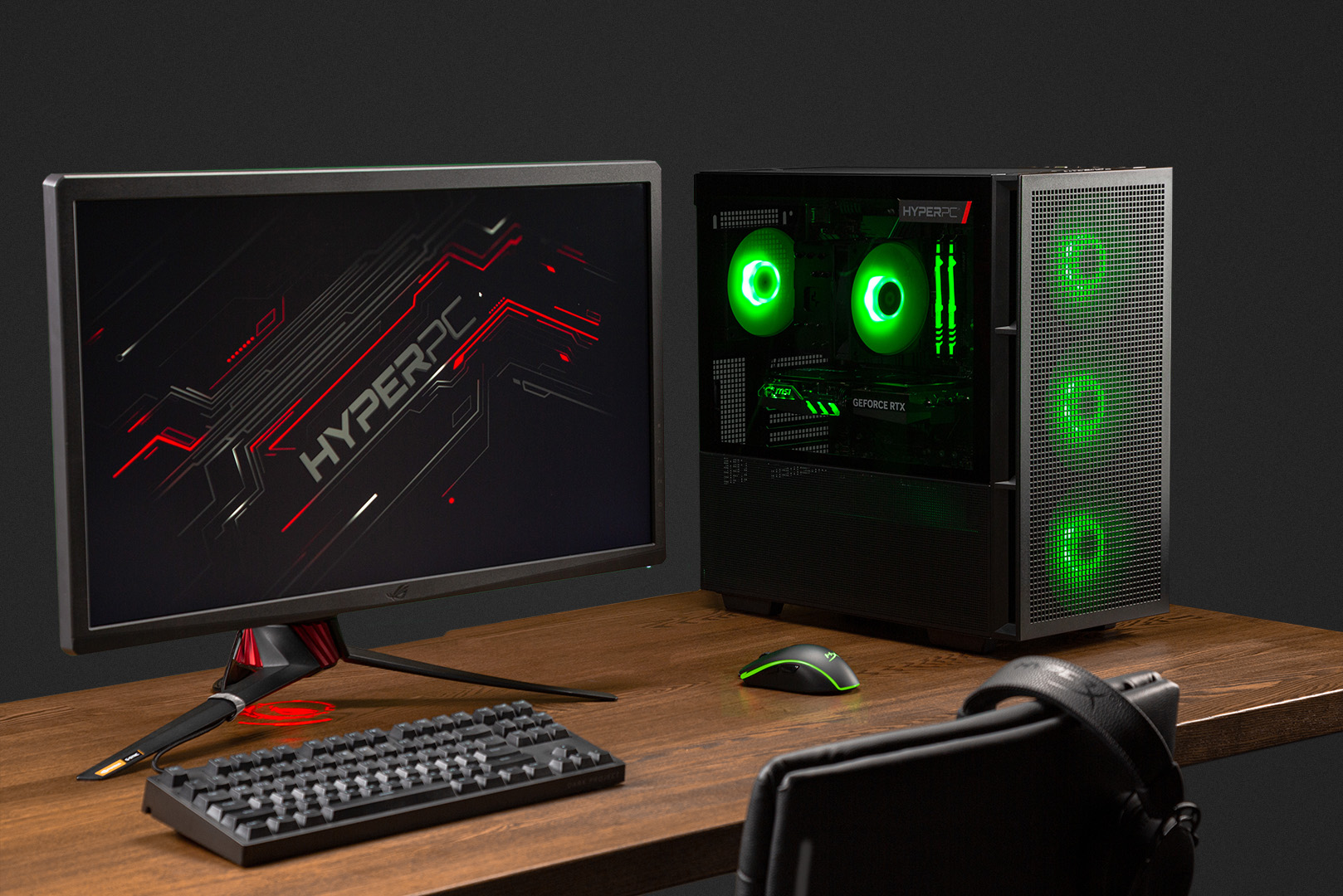
In 2026, the AM4 platform is not merely alive; it remains actively in demand for targeted upgrades of older systems. For basic tasks and cost-effective upgrades, A520 or B450 chipsets are sufficient, but for a full gaming experience with the Ryzen 7 5700X3D, B550 remains the optimal choice.
When buying used motherboards on the secondary market, always stay alert: carefully inspect the AM4 socket for mechanical damage, check the PCB around the VRM area for darkening and burn marks from mining, and require a demonstration of operation under load in stress tests.
We invite you to explore current modern configurations in the HYPERPC catalog, which features only tested and perfectly balanced solutions on new sockets. If you have questions about component compatibility or are planning an upgrade, ask in the comments — we are always ready to help you choose the best option for your ideal gaming PC.

 Arabic
  English