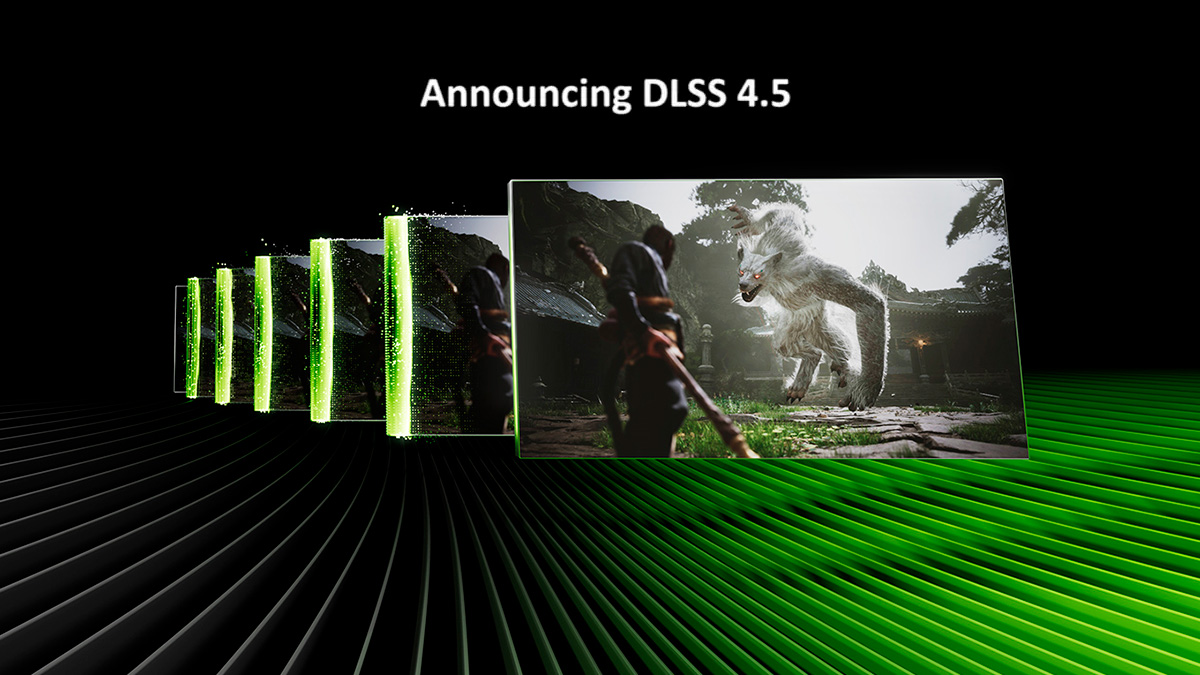
At CES 2026 this January, NVIDIA revealed the next evolution of its upscaling technology—DLSS 4.5. The update introduces a new AI approach designed to maximize image fidelity and frame rates, marking a significant milestone for PC gaming.
The headline feature is the 2nd Generation Transformer Super Resolution model. This new AI engine dramatically improves sharpness and stability in moving images, reducing the visual artifacts often seen in fast-paced games. Additionally, the updated Dynamic Multi Frame Generation can now create up to five AI-generated frames for every single native frame. For gamers with high-refresh-rate monitors (240Hz+), this results in unprecedented smoothness.
However, early benchmarks reveal a divide in performance. The technology is optimized for the latest hardware: GeForce RTX 40 and RTX 50 series GPUs handle the new AI workload effortlessly thanks to built-in FP8 acceleration.
In contrast, older hardware struggles. Users with RTX 20 and 30 series cards have reported performance drops of roughly 14–24% when enabling DLSS 4.5 compared to previous versions. The complex calculations required by the new Transformer model appear to bottleneck these older architectures, forcing users to trade raw performance for better image quality.
Conclusion from HYPERPC:
DLSS 4.5 proves that the future of gaming relies heavily on specialized AI hardware. While the visual improvements are stunning, they require a modern GPU to run efficiently. At HYPERPC, we ensure our premium systems are equipped with the latest GeForce RTX 40 and 50 series cards, allowing creators and gamers to fully leverage these cutting-edge features without sacrificing performance.
Verified Sources
- NVIDIA GeForce News: (https://www.nvidia.com/en-us/geforce/news/).
- TechPowerUp / Videocardz: (https://www.techpowerup.com/).

 Arabic
  English