We are ready to help
IPS or VA: An Honest Panel Comparison for Gaming and Work
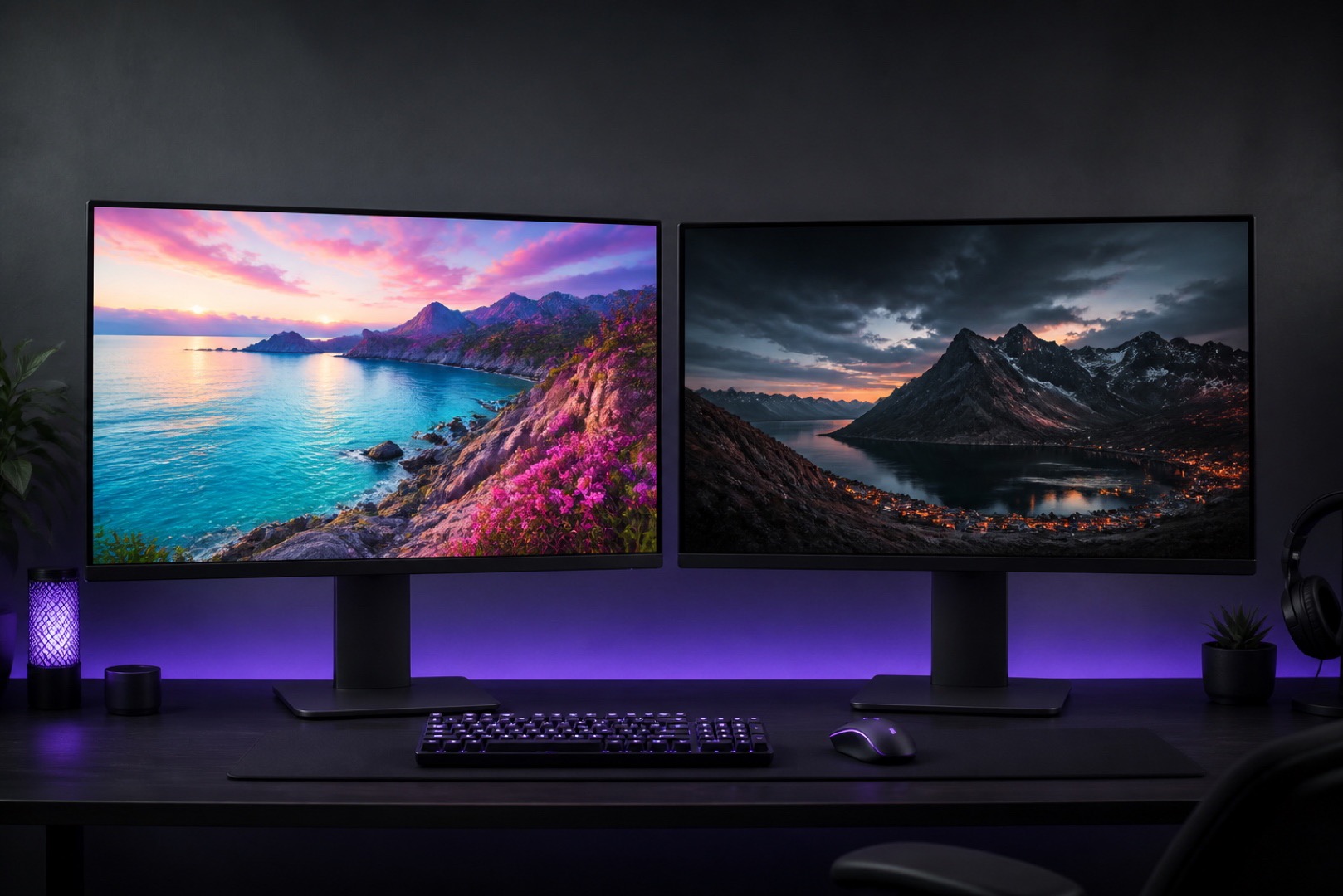
Key Takeaways
- IPS wins on color and viewing angles, making it the better choice for graphics work and everyday use. IPS viewing angles reach 178 by 178 degrees, and colors stay stable even from the side.
- VA wins on contrast and black depth: typical contrast is 3000:1 and higher versus about 1000:1 on IPS. That makes VA a strong pick for movies and dark scenes.
- On response time, IPS is usually faster (1 to 3 ms GtG), while VA (4 to 8 ms) more often shows smearing of dark moving objects, although newer VA panels narrow that gap.
- There is no universal answer: for competitive games and color-critical work choose IPS; for movies and atmospheric single-player games in a dark room, VA shines more.
Introduction
IPS and VA are the two most common panel types in gaming and productivity monitors, and each has its own strength. In short: IPS delivers more accurate color and wider viewing angles, while VA delivers deep blacks and high contrast. There is no ideal panel for every scenario, so the choice always comes down to the task: whether you play fast shooters, watch movies, or work with color. Below we explain how both technologies work, compare them honestly on color, contrast, and response time, and suggest what to pick for a specific use case.
1. How IPS and VA Work
How They Work and Key Differences
Both panels are liquid-crystal (LCD) displays and differ in how the crystals orient when voltage is applied. In IPS (In-Plane Switching), the crystals sit parallel to the screen plane and rotate within that plane, which gives even backlighting and stable color from any angle. In VA (Vertical Alignment), the crystals stand perpendicular and tilt during operation, blocking the backlight more tightly in black scenes — hence the high contrast. Simply put, IPS is optimized for color and angles, while VA is optimized for black depth and contrast.
Where TN Fits for Context
There is also a third, older type: TN (Twisted Nematic). Historically it was the fastest and cheapest option, but it lost to both modern panels on color and viewing angles. Today TN is almost gone: IPS has caught up in speed while keeping image quality, so for most buyers the real choice comes down to IPS versus VA.
2. Color and Viewing Angles
The IPS Advantage
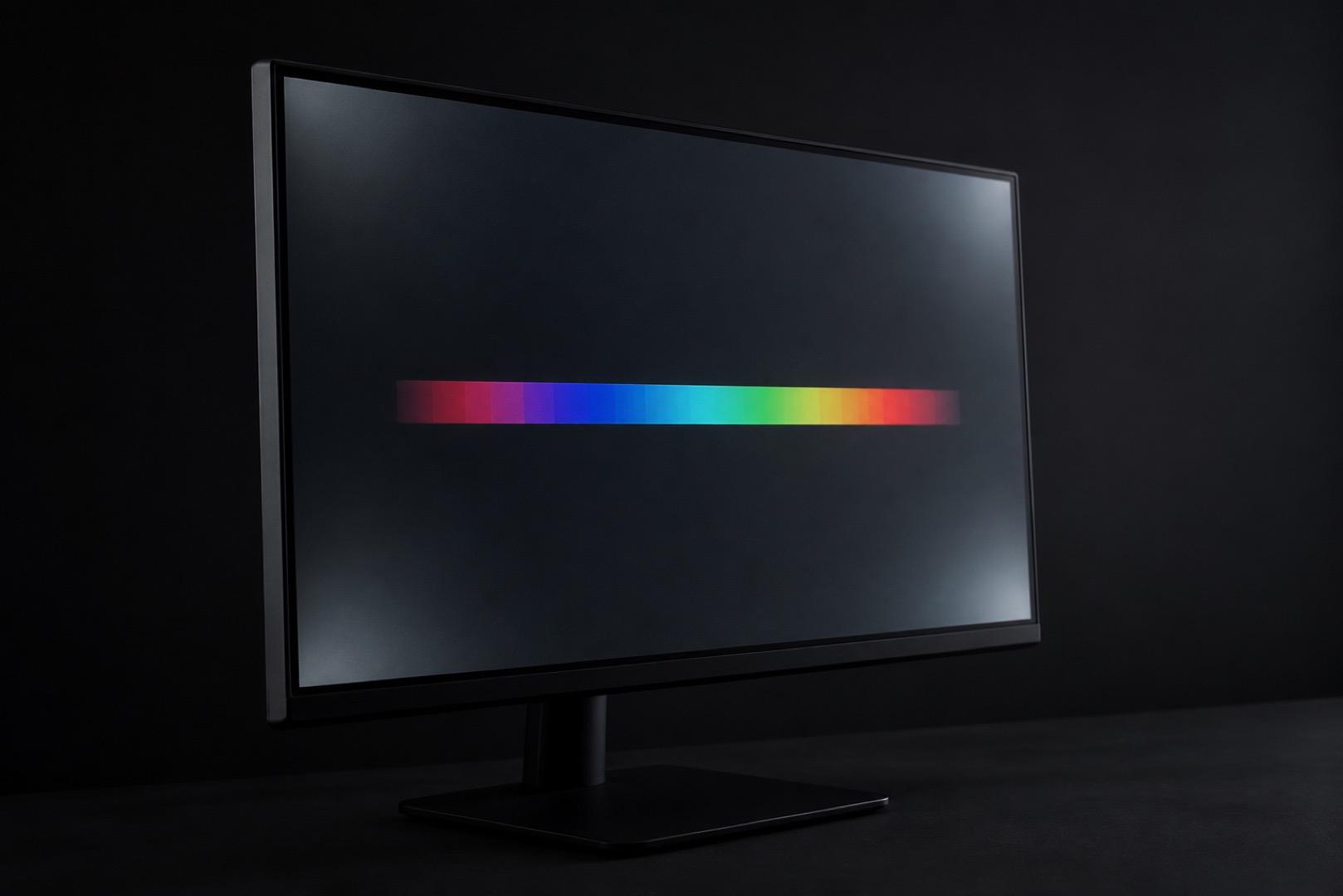
The main strength of IPS is color. The panel reproduces shades more accurately and covers wider color gamuts, and the image barely shifts when viewed from the side: viewing angles reach 178 by 178 degrees. That is why IPS is considered the standard for graphics, photo, and video work where color predictability matters, as well as for scenarios where several people view the screen or look at it from an angle.
The IPS Glow Caveat
IPS has a characteristic trait known as IPS glow: a slight glow in the screen corners that is visible on dark backgrounds at an angle. It is not a defect, but a property of the technology. In a bright room and when working with documents the glow is almost invisible, but in dark games and movies it can lightly illuminate the corners. For the same reason, black on IPS looks more dark-gray than truly deep.
3. Contrast and Blacks
Where VA Excels
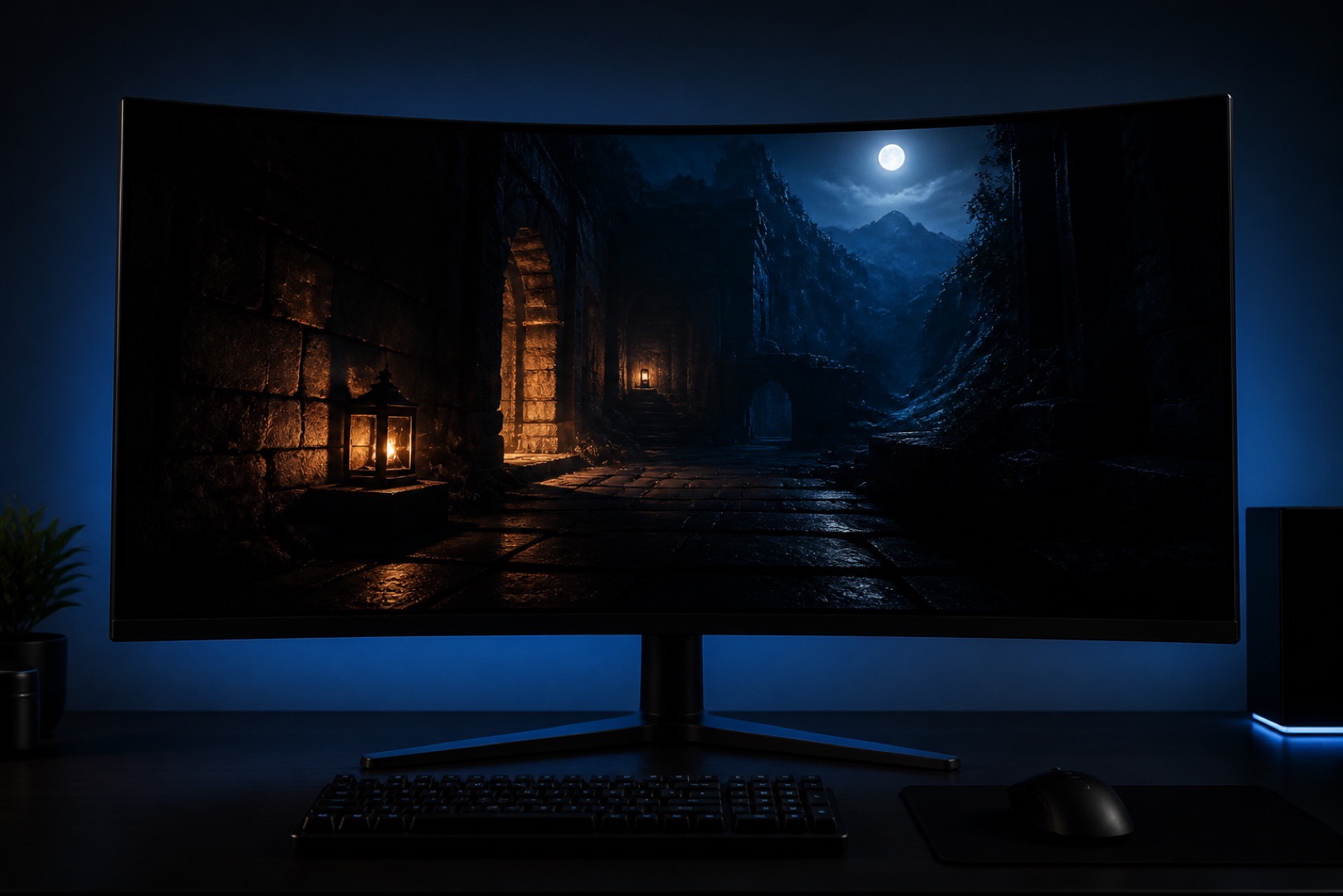
Here VA takes the lead. Typical VA panel contrast starts at 3000:1 and higher, while IPS usually stays around 1000:1. In practice that means blacks on VA are truly dark rather than grayish: night scenes, dark interiors, and black interfaces look more dimensional and deeper. For watching movies in a dim room and for atmospheric single-player games, this is a clear advantage.
Motion Smearing
The flip side of VA is smearing of dark objects — black smearing. When a dark object moves quickly across a dark background, pixels cannot switch in time and a short trail follows it. This is most noticeable in fast games and dynamic video with dark scenes. Newer VA panel generations have reduced the effect significantly, but all else equal IPS still looks cleaner in motion.
4. Response Time and Gaming
What Matters for Fast Games
For competitive and fast games, response time is critical. IPS panels usually switch in 1 to 3 ms GtG, and top models are even faster, while VA more often lands in the 4 to 8 ms range. The gap is closing: some recent VA panels reach about 1 ms. But if you mainly play shooters and fighting games where every fraction of a second matters, IPS remains the more predictable choice for clean motion.
The Role of Refresh Rate
Panel type is only half the equation; the other half is refresh rate. A 144 Hz or 240 Hz monitor delivers a noticeably smoother image than a standard 60 Hz display, whether it is IPS or VA. So for gaming look at the combination: fast panel response plus a high refresh rate plus adaptive sync support, which removes screen tearing.
5. Choosing by Use Case
Gaming, Movies, and Color Work
The easiest way to choose is by use case. For competitive games and everyday work, pick IPS for speed, color, and angles. For movies, streaming, and atmospheric single-player games in a dark room, VA stands out thanks to deep blacks. For professional color work, IPS is effectively the only practical option because of shade accuracy and stability.
| Panel | Color and angles | Contrast and blacks | Response | Best for |
|---|---|---|---|---|
| IPS | Excellent, angles up to 178/178 | Average (~1000:1) | Fast (1 to 3 ms) | Gaming, color work, all-round use |
| VA | Good, with off-axis shift | High (from 3000:1) | Average (4 to 8 ms) | Movies, dark single-player games |
| TN | Weak | Low | Very fast | Budget use case, leaving the market |
Final Recommendations
If you are still unsure, base the decision on where you spend most of your time. A mixed scenario (games plus work plus content under normal lighting) more often points to IPS as the more versatile option. A home theater setup and a dark room lean toward VA. From the experience of HYPERPC service center engineers, buyers often overrate panel type and underrate refresh rate and adaptive sync: in practice, moving from 60 to 144 Hz feels stronger than the difference between good IPS and VA panels.
Frequently Asked Questions We prepared the answers.
-
What is better for gaming: IPS or VA?
For fast and competitive games, IPS is usually preferable thanks to quicker response and cleaner motion without smearing. For atmospheric single-player games in a dark room, VA is stronger thanks to deep blacks and high contrast. In both cases, a high refresh rate and adaptive sync matter.
-
Which panel is better for color work?
For color work, photo, and video, IPS remains the standard: it reproduces shades more accurately and keeps color stable off-axis. VA is a weaker fit for these tasks because brightness and tint can shift when viewed from the side.
-
Is IPS glow noticeable in practice?
In a bright room and when working with documents, IPS glow is almost invisible. It mostly shows on dark backgrounds at an angle — for example in dark games and movies — as a slight glow in the screen corners. It is a technology trait, not a defect.
Conclusion
IPS wins on color and viewing angles, VA on contrast and black depth, and there is no single best panel. The choice depends on whether you play fast games, watch movies, or work with color, and also on room lighting. And remember to weigh panel type together with refresh rate and adaptive sync support: together they deliver that smooth, easy-on-the-eyes result.
You can pick a monitor and system for your needs in the HYPERPC catalog or build a configuration in the gaming PC configurator.

 Arabic
  English