We're ready to help you
AI Acceleration in Hardware: How Neural Engine, DLSS 4, and AI Cores in GPU/CPU Transform PC Performance

Hardware AI Acceleration in PC: How Neural Engine, DLSS 4, and AI Cores Change Performance
Digital evolution has entered a new phase: a modern computer is more than just a processor and graphics card. It's a complex system where artificial intelligence, integrated directly into hardware, plays a central role. Technologies such as Apple's Neural Engine, NVIDIA's DLSS 4, and dedicated AI cores (NPU) in Intel and AMD processors are shaping a new performance standard. This article will explain how hardware AI acceleration is redefining your PC's capabilities, transforming it from a classic computing machine into an intelligent workstation and gaming platform.
The Heart of Hardware AI: From Coprocessors to Neural Processors
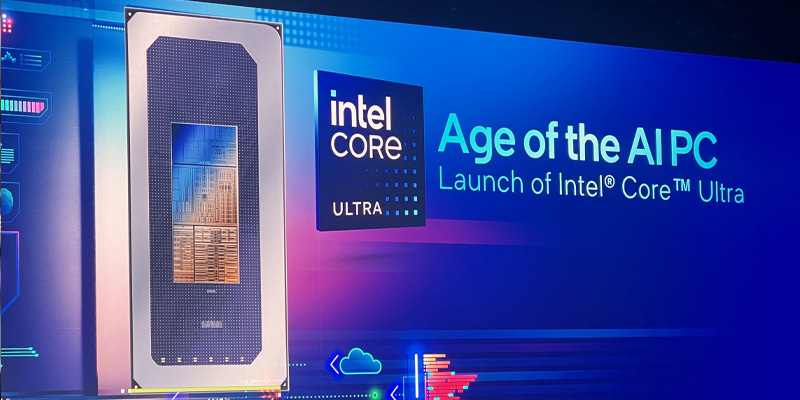
The idea of a dedicated accelerator for specific tasks is not new. However, the modern trend is creating energy-efficient blocks optimized exclusively for neural network computations. These blocks, known as Neural Processing Unit (NPU) or AI core, free the central processing unit (CPU) and graphics processing unit (GPU) from resource-intensive machine learning tasks, allowing them to focus on their core functions.
- AI Cores in CPU: Companies like Intel and AMD integrate NPU into their latest processors. These low-power coprocessors are designed for background AI work: processing voice and video in teleconferences, managing security systems, and optimizing power consumption. Their key task is to increase the efficiency of everyday workflows without burdening the main computing blocks.
- Tensor Cores in GPU: In NVIDIA GeForce RTX graphics cards, hardware AI acceleration is implemented through Tensor Cores—specialized cores for matrix computations. They are the "hardware" foundation for the revolutionary DLSS (Deep Learning Super Sampling) technology, which fundamentally changes the gaming experience. Each new generation, such as 5th generation Tensor Cores in the Blackwell architecture, exponentially increases neural network operation performance, enabling more complex and intelligent AI models to run in real-time.
- Apple Neural Engine: In Apple's ecosystem, this role is performed by a dedicated Neural Engine integrated into Apple Silicon chips. It provides lightning-fast execution of machine learning tasks directly on the device, from photo processing to the Siri voice assistant.
The combined work of these specialized blocks forms the foundation for a new type of PC—the so-called "AI PC," where artificial intelligence becomes not an additional feature, but a fundamental part of the architecture, directly affecting performance, response speed, and the quality of the final result in all areas of use.
Graphics Revolution: How DLSS 4 Multiplies Game Performance
If AI cores in CPU handle background optimization, then in the graphics sphere, the impact of hardware AI is revolutionary and tangible. The brightest example is DLSS technology from NVIDIA, which achieved a qualitative leap in its fourth generation. DLSS 4 is not a single technology, but a whole complex of neural network rendering methods working in tandem.
Key components of DLSS 4:
- Super Resolution: The core technology that renders the image at a lower resolution and then uses AI to upscale it to the monitor's native resolution. This instantly reduces the load on the graphics card, freeing resources for higher graphics settings or frame rates.
- Ray Reconstruction: This component replaces classic manual denoising algorithms in ray tracing with a single AI model. As a result, the detail of lighting, reflections, and shadows improves, making the image sharper and more realistic.
- Frame Generation: An innovation that uses AI to create entirely new frames between those rendered by the game. This allows doubling or even tripling the FPS count.
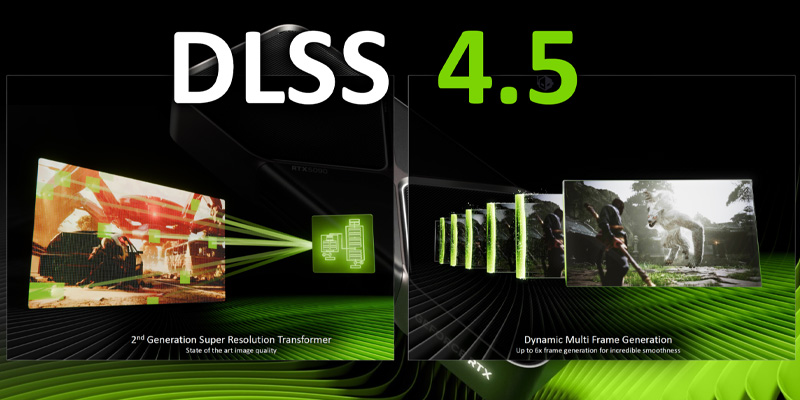
The most significant innovation in DLSS 4 was Multi Frame Generation. If the previous generation created one AI frame between two real ones, the new technology can generate up to three additional frames in one pass. Thanks to this, in games with fully enabled ray tracing on top-tier graphics cards, achieving phenomenal 240 FPS at 4K resolution has become possible. This was the result of synergy between a new, 40% faster AI model and hardware improvements in the Blackwell architecture, such as abandoning the separate Optical Flow Accelerator hardware block in favor of a more efficient neural network.
It's important to note that for maximum effect, DLSS 4 requires modern hardware: Multi Frame Generation is only available on GeForce RTX 50 series graphics cards. However, the key improvement in image quality—the transition to a new transformer AI model—is available to all RTX graphics card owners, starting with the 20 series. This model, built on an architecture similar to ChatGPT, dramatically improves temporal image stability, reduces "ghost" artifacts (ghosting), and increases detail of moving objects. Even if a game hasn't been officially updated to DLSS 4, users can forcibly activate new models through driver settings in the NVIDIA application.
- Practical Example: In Cyberpunk 2077 with maximum settings and ray tracing (RT Overdrive), DLSS 4 with Multi Frame Generation demonstrates more than 8x performance increase compared to classic rendering, while also reducing input latency for more responsive gameplay.
- Power Consumption Optimization: New AI models are not only more powerful but also more efficient. The frame generation model in DLSS 4 uses 30% less video memory, reducing overall system load and contributing to more stable operation.
Beyond Games: How AI Acceleration Transforms Work Tasks
The impact of hardware AI has extended far beyond the gaming industry. The presence of a dedicated neural accelerator (NPU) and powerful Tensor Cores opens a new era for creative professionals and regular users, offering unprecedented speed and privacy.
- Local Data Processing: Running language models (like Llama), generative neural networks for image creation (Stable Diffusion, FLUX), or video processing tools is now possible directly on a PC, without sending confidential data to the cloud. This is not only faster but also safer. NVIDIA claims a 10x acceleration in image generation on RTX GPUs compared to systems without such acceleration.
- Creative Applications: Leading programs for editing (DaVinci Resolve, Adobe Premiere Pro), 3D rendering (Blender, V-Ray), and photo processing now use APIs to offload AI computations to Tensor Cores or NPU. This allows real-time application of complex effects, upscaling video resolution, or accelerating final rendering.
- Everyday Productivity: AI also optimizes routine tasks: improves video quality in calls by removing noise and replacing backgrounds (NVIDIA Broadcast), enhances streaming video sharpness in the browser (RTX Video), and allows instant searching through documents and notes using a local chatbot (ChatRTX).
The Future of PC: Integrated Intelligence as Standard
The trend is clear: the future of personal computers is inextricably linked to deep integration of artificial intelligence into hardware. This is no longer just a marketing move, but a technological necessity defining industry development.
- Technology Convergence: Boundaries between CPU, GPU, and NPU will continue to blur. Manufacturers will strive to create unified heterogeneous architectures where tasks are dynamically and most efficiently distributed between different types of cores.
- Accessibility and Spread: Today, AI acceleration is the domain of top-tier chips and graphics cards. However, as with any technology, over time it will descend to mid-range and budget segments, becoming a standard feature of any new PC.
- New Development Paradigms: Software and operating systems (especially the anticipated Windows 12) will be built around the assumption that users have an NPU. This will open the path to fundamentally new interfaces, control methods, and background optimization of the entire system.
Conclusion
AI acceleration in hardware is a fundamental shift in the computer industry, comparable in significance to the transition to multi-core processors or the emergence of discrete graphics accelerators. From Neural Engine and AI cores in processors to Tensor Cores and DLSS 4 in graphics cards—specialized blocks for neural network computations are fundamentally changing the perception of performance. They not only multiply FPS in games, creating incredibly smooth and detailed visuals, but also transform workflows, making local execution of complex AI models fast and, most importantly, private. The modern PC has ceased to be just a computing tool; thanks to hardware AI, it becomes an intelligent partner capable of predicting, optimizing, and creating.

 Arabic
  English